

Why does everyone hate data centers?
My chat with Jasmine Sun about what role data centers could play in the midterms, how the backlash caught Silicon Valley by surprise — and why Claude can be so weird.

One of my philosophies for this newsletter is to write about the things that I’m thinking about anyway. But there’s long been a deficiency when it comes to our coverage of AI, which occupies more and more of my headspace even though we only write about it occasionally. Not only am I profoundly interested in increasingly less abstract questions about how AI progress might disrupt society, but I’m also becoming much more of a power user because AI programming tools have reached the point where they’re now quite helpful with programming our various politics and sports models. I’ve spent something like 700 hours1 working on these models since March2, with Claude and ChatGPT serving essentially as my coding assistants.
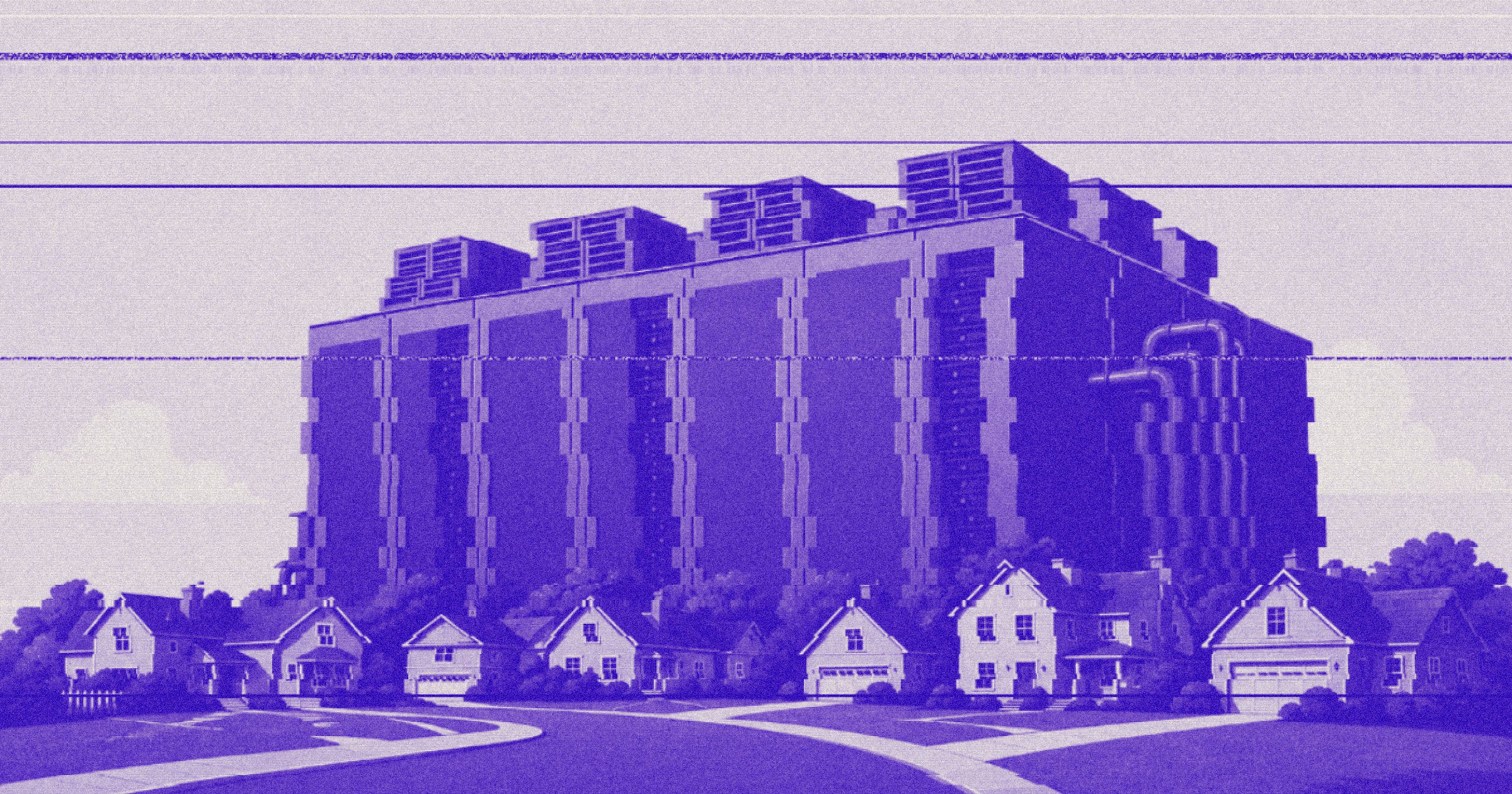
On a less personal level, we’ve probably passed a long-predicted inflection point where AI is playing a much more prominent role in American politics. And much of the public’s uncertainty about AI has been channeled into a variety of concerns and anxieties around data centers. Google searches for the term “data center” can bounce around some, but so far in 2026, they’re about 3.5x higher than in 2025 and almost 10x higher than in 2024.
The feelings are fairly one-sided. Data centers are overwhelmingly unpopular, with about 70 percent of Americans opposing the construction of data centers in their communities. They were a big story in the Democratic primaries in Michigan and Wisconsin, but even red states like Texas are beginning to have their doubts.
So I thought it was a great time for a chat with Jasmine Sun. Jasmine is based in San Francisco — I first met her when she was a product manager at Substack — but she’s now an independent journalist and newsletter writer who knows the tech industry well by virtue of having worked in it. She recently took a long “field trip” to Wisconsin and Michigan to study opposition to data centers on the ground, speaking with local residents as well as politicians like Abdul El-Sayed. It’s truly excellent, nonpartisan work, and speaks to how out of touch Silicon Valley has become with the rest of the country’s concerns.
The video version of our chat is below. But this is one of those cases where I’d probably recommend reading the (lightly edited) transcript instead. That’s both because we removed a portion where I got knocked off the Internet at some point (maybe our robot overlords weren’t happy about our little chat) and because the conversation gets technical in places and it’s helpful to have links and footnotes that explain some of the terminology. Indeed, one of the challenges Silicon Valley faces is that much can be lost in translation in any and all discussions on AI policy.
Nate Silver: Jasmine, how are you? You just got back from a reporting trip to the Midwest, right?
Jasmine Sun: Yeah. I did about 10 days in Wisconsin and Michigan, then about a week and a half in New York, and now I’m back in SF, where I’m normally based. It’s good to be back in the city.
Nate: I wanted to give a big plug for your newsletter. You were formerly a product manager at Substack, is that right?
Jasmine: I was at Substack for like four years, mostly product stuff.
What the data center backlash looks like on the ground
Nate: I think I saw you at the Manifest conference a couple of years ago — the nerdiest conference out of all the nerdy conferences I’ve ever been to. But the reason I want to plug it is that you’re doing a lot of deep, original, thoughtful reporting and analysis. Substack is great, but it’s often more rewarding for things like “takes”. Obviously we have our election models and things like that. But it doesn’t reward reporting as much, which is an incredibly important and valuable thing. It might result in one post taking several weeks instead of a few hours. What inspired you to take this long journey?
Jasmine: One thing is that I am just not as good as many of the Substackerati at churning out 1,000-word takes on whatever just broke. I’m very impressed by people who can come up with, “here’s my 30 takes from the election that happened last night”. I read that stuff, it’s amazing. But I’m better at taking a bit more time to research, report, and think about things.
I mostly cover AI and Silicon Valley from a cultural and politics angle. A lot of my work is either trying to explain what is going on in Silicon Valley and the AI industry, which is extremely weird, as you know, to the rest of the world. Or in times like this, trying to talk to folks outside of SF about how technology is impacting other places, and bring some of that knowledge back to my friends in Silicon Valley.
Over the past six months, as many people have seen, the data center backlash has picked up, and I think even the broader AI backlash has gotten quite a bit more intense. People remember the booing at college graduations anytime a speaker mentions AI. Or the assassination attempts, like of Sam Altman, that were motivated by more x-risky [existential risk] concerns — a gunman from the Stop AI people showed up at the OpenAI office.3 There was an Indiana councilman who approved a data center project, and someone shot a gun 13 times at his front door.
So I saw these [data center] moratoriums popping up, and I was just like, wow, people really don’t like AI. They really, really don’t like data centers. I’ve seen the polls, but I didn’t really get why. And most of my friends in SF, especially people I know in the AI industry, were baffled. They were just like, maybe everyone’s watching too many TikToks about water or something. But I felt like I didn’t get it [until] I actually went and spoke to folks who were protesting data centers in their own neighborhoods and in their own communities. So I thought it’d be a good opportunity to take myself — very much a coastal elite who spends all my time in SF and New York — out to the Midwest and talk to a bunch of people who don’t think about AI all day, about AI and data centers.
Nate: I did a lot of reporting trips to Silicon Valley for my book, and California to me feels further and further away. You know what I mean? The entire West Coast [feels further away]. I think this is part of what you talked about with Ezra Klein recently. Part of what Abundance talks about is some of the failures of governance in California, but maybe more relevantly for our conversation, attitudes toward technology, toward progress, toward growth, and toward AI in particular.
It seemed to me on those reporting trips that the politics of this were going to be complicated. Telling people some combination of “we’re going to take everybody’s white-collar jobs and that’s good” and “there’s a 10 percent chance we’re going to destroy the world because of misaligned AI, but trust us, the upside is really high” — that seemed like it was going to encounter problems when it encountered a wider audience. What did you see on the ground in Wisconsin and Michigan that surprised you, that you wouldn’t have had the vantage point to see in SF?
Jasmine: There’s a bunch of stuff. I do want to talk a little bit about the risk profile stuff too, because I had read excerpts of On the Edge, but I read it in full, front to back, in July or something. Partly because I was thinking about the Silicon Valley values gap and different attitudes toward risk, and I was like, oh, I should actually go and read your whole book. Which was super helpful for thinking about these questions.
But what did I see? There was a bunch of stuff that was surprising, and again, it kind of shows what a bubble I was in. One is that a lot more people were really furious not just at the AI companies, but at their local governments. I kind of thought that everyone would hate AI because of the job stuff, or that they were really suspicious of OpenAI, Meta, whatever. And there was a general negative-ish sentiment toward AI and AI companies. But when I asked activists what riled you up, or why are you frustrated with this data center, it was much more about: we hate how our local council or our mayor kind of bent over and sold out to these tech companies. So it was much more a story of dark money and politics and corruption, and your democratically-elected officials selling you out to some big corporation who shows up with a check and an NDA, more so than anger about the technology.
I actually heard very little about the technology unless I explicitly prompted people — hey, what do you think of ChatGPT, do you use it? Some people were like, yes. Some people were like, no. Most people were like, sometimes it’s not that useful, but it’s fine. That was kind of the median response I got about ChatGPT. As someone who spends a lot of time in the tech world, all we think about is “big model scary”, but over there it’s much more “big corporation scary”. And so I found that really surprising.
The backlash isn’t just a “PR problem”
Nate: Traditionally, when you have a new technology, Silicon Valley prides itself on there being disruptive companies that undermine the big hegemons, and that scale proves to be a disadvantage at some point. AI is different. OpenAI was founded by some of the most powerful people and companies in Silicon Valley. Google is Google. Anthropic is very impressive, I would say, given that it’s kind of stayed in the lead lap without that kind of heritage — but at the same time, it started with a lot of seed capital.
Which brings me to the NDAs. Are most projects developed under NDA? How does that play out? You don’t realize it’s being built until the giant building starts going up?
Jasmine: I think that’s definitely how a lot of residents feel. There are NDAs signed in a lot of data center deals. My sense is that they’re actually becoming less common because of the backlash, and a lot of people, even the most pro-build, pro-data center folks I talked to, now regret the NDAs. They think it made things much worse. But a year or two ago, when these deals were being negotiated, NDAs were pretty common.
The process is kind of like the HQ2 process with Amazon. The data center developer would be evaluating a bunch of different potential sites in different cities, and they would present it as an economic development thing. We’re going to contribute so much to your tax base. Who wants it? Who’s going to hand us some subsidies? Who’s going to build out some roads? So they would often engage in a competitive bidding-style process where they’re evaluating multiple towns or cities at once, and during that process the NDAs would prevent towns and cities from talking to each other. Another reason for the NDAs was that sometimes you need to buy out farmland, and as soon as farmers know that it’s a data center showing up and not some other project, they’re like, wow, let me add another zero to that price tag. So I think the NDAs were really a way to create a power asymmetry, frankly, in the negotiations between the data center developers and the people they were negotiating with.
But one thing I learned was that the NDAs have really increased distrust and backlash. I think they’ve made the backlash much worse by the time people do realize, oh, it turns out Project Cannoli or Project Nova is actually a hyperscale data center run by OpenAI.4 And the other thing city officials would tell me is that the NDAs made it very hard to get ahead of social media. You can sign an NDA, but people are going to start whispering. People are going to hear about farmland buyouts and start wondering what’s going on. People start spreading rumors on Facebook. They say things about water. They say things about the deal. And the city council, if they’ve signed an NDA, can’t do anything to get ahead of that story or correct the record. So I really heard a lot of folks say, yeah, man, I am for the data center, but we should not have signed an NDA. Even Microsoft has said, we’re not doing NDAs anymore as a policy, because of how bad they’ve made it.
Nate: I think Ezra made this point, and maybe I’m jumping ahead. But you sometimes hear the AI labs — and it sounds like you’ve had conversations with senior people at the labs — say, oh, we have a PR issue, a marketing issue. And it’s kind of like, no, I think you have an actual issue. People are rational to wonder, when you have NDAs, is this really benefiting my town or my community? And more broadly, as we’ll get to, their pitch about revolutionizing all of society might be exciting for investors, but that doesn’t go down easily either.
They’ve been caught flat-footed, I think it’s fair to say. Was that inevitable or predictable, or do you blame them for taking so long to catch up?
Jasmine: I kind of do. So often I’m in San Francisco talking to folks I know in the AI industry, and they’ll say things, and in my head I’m just like, do you guys hear yourself? If any normal person walked into this conversation, they would flip out.
One of those examples — I think this came up in the Ezra interview, and it’s come up in your work — is that question of, why would you build something if you think there’s a 10 or 20 percent chance the thing you build kills us all? And I will hear people straight up say, yeah, that’s true, but I think it’s somewhat more likely, maybe there’s a 50 percent chance, that we all live forever and all the diseases are cured. So the expected value of 50 percent we live forever outweighs the 20 percent we all die, and I’m willing to take that chance and roll the dice a few times.
And I’m just like, man, I don’t actually think that most people in this country or in the world would take that bet. But more than that, those folks don’t really have a choice about whether they take that bet, because Silicon Valley is taking the bet and then imposing the costs and risks on other folks.
That was what I really heard with the data center stuff. There’s this sense that maybe people don’t know if AI is a bubble or not. They don’t know if it’s useful to them or not. They’re willing to cop to, yeah, it might have some benefits, it might help the economy in certain ways. But fundamentally there’s often this question of, why is Mark Zuckerberg not putting the data center in his backyard? Why are they putting it in Janesville’s backyard or Mount Pleasant’s backyard? Why are the costs and the risks being externalized while Silicon Valley reaps the benefits up front? I think that was very frustrating to a lot of the people I talked to.
Nate: What downsides are there to a data center being in your local community? A lot of them are quite ugly.
Jasmine: They’re very ugly.
Nate: So there’s the aesthetic aspect. They’re using a lot of power, I suppose.
Jasmine: Yes, lots of power.
Nate: In your reporting, are the environmental impacts probably overstated?
Jasmine: I think they’re kind of overstated. I mean, it depends on the impact. Power and electricity is the most serious one. A lot of data centers are putting so much strain on the grid that you’ve got to build out new power plants to support it, and that’s going to have consequences. A lot of data centers now — though not any of the ones that I visited — are also doing behind-the-meter power provision. They’re not connecting to the grid. These developers are building their own on-site gas plants. In the near future, natural gas is going to be the main thing that powers these data centers, and that’s not super great. People are hoping that eventually data centers will green the grid and use more renewables, but reliability isn’t quite there yet.
I will say the water stuff I think is pretty overblown. It was kind of funny, because in Janesville there’s literally a golf course right next to the proposed data center site. Same thing in Saline — golf course right next to the data center. I tried to do some back-of-the-napkin estimations on data center versus golf course water use based on the size of each, and it’s very comparable. But nobody was complaining about the golf course.
In terms of air pollution and runoff, I’m not saying that a data center is going to have less pollution than an office park. But compared to heavy manufacturing, which is often what these sites were zoned for — many of them were industrially zoned — compared to the auto plant, a data center is going to be much cleaner. So it’s also this question of trade-offs. What was going to be there if it wasn’t a data center? Was it going to be a forest, or was it going to be an auto plant?
I tend to think the environmental stuff is worrying to people because it feels real and material. People do care about the natural landscape of the place they live in, and it does motivate people. But people also look at the trade-off and think: I kind of understand that this auto plant is here, it’s creating 5,000 jobs, it’s making cars, and I want a car, we all need to drive cars. Versus, there’s this ugly data center here, it’s bad for the environment, but also I don’t really know that I need AI and I’m not really sure who this is for. And maybe it creates 1,000 jobs for the next four years, but then it all goes away.
Nate: One thing that I think is helpful in this discussion, and probably more generally when analyzing politics, is that people often have reasonable anxieties that manifest themselves in arguably “irrational” ways, but are kind of rational on some deeper level. With support for Trump — I don’t mean to validate that in general, but he did win two elections — the notion that elites have kind of rigged the game in their favor, I’m sympathetic to that. Now, [of course] Trump is also rigging the game in his favor in much more cavalier and explicit ways.
But let me ask you a dumb question. Why aren’t there data centers in Palo Alto? Or are there?
Jasmine: There are some data centers in Santa Clara County broadly, [but[ not as many as Virginia or Texas or wherever. I did look into this a bit — how does the site selection process work? One is that it’s got to be kind of near the grid and near water, more so the grid than water. Data center developers will go to the utility companies before almost anybody else, and that’s why they’re not usually in the literal middle of nowhere. They’ll be an hour out of a metro area like Milwaukee or DC. That’s the reason they’re often in suburbs or small towns near big cities.
The second thing is you want cheap land. Data centers are really, really big. They are hundreds of acres. The Port Washington one is 700 acres. It takes a minute 42 seconds to drive past on the highway at 70 miles per hour. It’s gigantic — I’ve never seen a building that big. Land in Northern California is extremely expensive. And as we’ve learned from the data center backlash, there are NIMBYs everywhere. People everywhere know how to pack city council meetings and shut down a local development, but I think that art has been refined in Northern California more than anywhere else. Building is happening more in the South Bay, less in the cities. But it’s not the most economical place to build a data center.
Nate: Let me ask another question that I don’t know the answer to. Is there an advantage to them being close to the users? How much is lost if let’s say you had a data center in Panama? It’s within the North American continent, it’s all technically on the same grid.5 How much degradation is there? Does it matter physically where they are in the food chain?
Jasmine: I should say that I am less of an expert on the technicals here. My sense is that some data centers are for training — to train the next big model with the biggest chips, like the Nvidia Blackwells or whatever — and some are for inference, which is when you ask ChatGPT a question and it sends your query to the data center, some calculations happen in the chips, and they send it back. Inference needs to be fast. You want low latency, you want ChatGPT to answer you quickly, so I think there are some inference benefits to having data centers located geographically somewhat near you. It might help with reliability, speed, things like that.
The other thing is economic and supply chain leverage. If data centers are such an important part of the AI supply chain, they are obviously a big economic benefit in terms of tax revenue to whatever locality they’re in. But geopolitically, people worry about putting too many data centers outside the U.S. and making the U.S. overly dependent on choke points that are now controlled by another country. That’s why people are worried about what if we put these data centers in, say, the UAE. Maybe it’s near a ton of gas, but actually we don’t really want to give the UAE a ton of leverage over the American AI supply chain.
Data centers were a big issue in the Michigan and Wisconsin primaries
Nate: What is the perception versus reality of job creation? These are good jobs in construction for a couple of years, but then these things are kind of on autopilot. Is that right?
Jasmine: Mostly. My sense is that in the process of constructing a data center, which takes two to six years depending on the size, you will need maybe from 500-ish to several thousand jobs. The Mount Pleasant campus Microsoft built took, I think, up to 10,000 workers during the two-to-four-year construction process. I would say that’s larger than usual, and again, not every worker is necessarily working the whole two years. But there are a lot of construction jobs created — electricians, construction workers, earth movers, crane operators, HVAC engineers. And they are getting paid generally very well. I talked to a union lead, I talked to an electrical contractor. They’re like, business is booming, our apprenticeship programs have doubled in size, it feels like a renaissance of the skilled trades.
And because there are so many projects, yeah, maybe it’s a four-year project, but you can move on to the next one. So I would not say the temporary nature of these jobs deterred the people in the skilled trades, because there are a lot of temporary jobs being created.
I do think communities were a little bit more critical of the temporary jobs aspect, because they felt like maybe these workers were not coming to stay in the community very long term. It wasn’t necessarily always locals who were getting the jobs, and even the people coming in to work on the data center would then leave again. And the maintenance of the data center maybe only requires 50 workers. They’re mostly just empty boxes full of computers. You need a couple security guards standing around and someone to fix stuff when it breaks, but they’re not gigantic job creators.
So I wouldn’t call the jobs thing a myth. I think the jobs are real and they’re really important, and there are opportunities for the skilled trades. But they’re also not the primary economic offering that data centers provide to communities.
Nate: How do unions tend to feel about these? Unions are usually pro-job creation. On the other hand, unions have become more politically progressive, and as AI concern gets coded as a little bit more left-leaning, that might affect them. And also, do people feel like we are digging our own graves? Do you hear things like that, where we’re building machines that will displace human labor — although probably more white-collar labor?
Jasmine: One of my favorite conversations was the one I had with Terry McGowan, who’s the SVP of the International Union of Operating Engineers. He’s been in the trades since he was 14. I met him in Pewaukee, so he’s from Waukesha County in Wisconsin, and he was fascinating to talk to.
The building trades — anyone in construction, heavy equipment, whatever — are very excited about data centers. A lot of these unions will give quotes on press releases or to the local news making the case for data centers, because they’re just benefiting. People are getting paid amazingly. Terry was telling me that workers are getting $100 cash per diems, non-taxed, so like 700 bucks a week just to work on these sites, because there are such big labor shortages that sites will be competing with each other. The Port Washington site will be trying to attract people from the Mount Pleasant site. I’ve heard stories about data center projects running ads to work on a different data center, saying you’ll get paid a little bit more. So the opportunities for workers are pretty great.
One thing I’m interested in, and was trying to poke at, is to what extent this is driving a wedge in Democratic coalitions — kind of for the reason you alluded to. On one hand, unions tend to be pretty Democratic, pretty progressive. On the other hand, Democrats have been leading the charge on things like data center moratoriums and being anti-AI broadly.
One theory I heard is that in the Wisconsin governor’s race, one potential reason Francesca Hong was the only Democratic candidate who supported a data center moratorium was that the skilled trades were a big enough faction that the other Democratic candidates didn’t want to alienate them. I suspected maybe something similar was going on with the governor’s or the Senate race in Michigan, though again, I’m not sure.
I did ask Abdul El-Sayed. I was like, hey, how do you feel about the fact that you’re pretty anti-data center, but a lot of the unions I talk to are pretty pro-data center, and you are pro-labor? I didn’t think his answer was that good. It’s on my Substack, so people can go look at it. But he was like, I think these union guys actually don’t like the data centers, and they regret working on them. And I’m like, I don’t know that that’s true of the union guys I’ve talked to.
Nate: Your timing — I don’t know if this was intentional — coincided with these extremely contentious Democratic primaries in Wisconsin and Michigan, and you spoke with El-Sayed. I want to ask about that in particular. But you hear a narrative sometimes in the political media I follow that, oh, data centers are a key issue that cropped up under the radar. You were there when these primaries were being held. What’s your sense of that? Do you think these were major election issues? If you go into town at the burger joint, are people talking about it, or is it for now more of an isolated concern?
Jasmine: You’ve probably also been trying to look at how much AI is actually going to become an election issue, which was one of my motivating reasons for choosing Michigan and Wisconsin. I was thinking, should I go to Texas? Should I go to Utah? Should I go to Memphis? But I was very excited about the primaries, and about both Michigan and Wisconsin being swing states, so I could spend time in more purple areas and talk to people on both sides of the aisle about data centers. And it was super interesting to see data centers come up both at a Francesca Hong event and at the Abdul El-Sayed rally I went to.
My sense, though — and I’ve looked at some of the polling here — is that if you have a data center that is literally in your town or city, or it’s being proposed, data centers will be a top issue for you. You will vote based on it — I will vote for the candidate who is going to not put a data center in my backyard. People will put it as a top five voting issue. I was talking to a canvasser for Will Lawrence in Michigan’s 7th District, who had been canvassing in Lansing, where there was a data center proposed and then a moratorium. And she said that in that particular neighborhood, 90 percent of the people brought up data centers immediately, because it was super salient at the exact time she went.
For most people, though, data centers are not a top issue. They will say they are against it. If you poll them for or against, it’ll be like 70-30 against, pretty bipartisan, though Democrats slightly more anti. But if you look at — Is this data center one of your top five issues? Is AI one of your top five issues? — it’s pretty low on the list for most people, unless the data center is in their backyard.
So my sense is that the way AI will show up in national politics is much more as fuel on the fire of existing concerns people have. If affordability is your top three issue and you think the data center is going to raise your electricity rate, then you’ll be pretty mad about it. Or if you’re worried about corruption and the data centers are evidence of your politicians being super corrupt, then that’s pretty frustrating. But I don’t feel like data centers on their own in national races are going to be a driving factor. I don’t know what you make of AI in politics and elections.
AI disruption won’t happen without political disruption
Nate: Look, if you assume any type of near-term “singularity”, very rapid takeoffs, or even medium-rapid takeoffs where it’s displacing all human labor quickly — when I read scenarios like AI 2027, the very detailed forecasting exercise, and I spoke to the authors of that, I think they really too much downplay the importance of quote-unquote “politics”. You are not going to have this type of transformation coinciding with any kind of continuation of politics as normal.
Now, whether that means politics won’t be normal and could involve literal revolutions — the Industrial Revolution [was] accompanied [by] the American Revolution and the French Revolution — or whether it means you work backward and say, okay, this is describing an impossible world politically, and therefore there must be something wrong with the prediction itself … I don’t know which. There are going to be bottlenecks people aren’t anticipating. To their credit, the AI 2027 authors assume that their proxy for OpenAI will become super unpopular.
But look, if there were very broad-based anti-data center sentiment, how much would that affect things? Because you hear, well, they’ll find South Dakota or the one [data-center-friendly] state, or Mexico, or the UAE. How much could broad opposition to data centers — let’s say it’s just in the U.S., and Europe’s always going to be opposed to any kind of thing like this — actually slow down AI progress?
Jasmine: It’s a good question. In general, when I talk to folks in the AI industry, they see the data center opposition as annoying and a minor roadblock, but they don’t see it as, this is going to stop us. Part of it is that a moratorium generally applies to new construction, and data centers take four years or whatever to come online anyway. So if you think you’re going to get takeoff in the next four years, which many of these people do, then all the data centers that are already being built and are not going to be paused [long] enough to achieve that. And again, people think there will be certain states that welcome data center construction.
I do think the Texas pause, even though it’s a bit narrower, spooked people a little bit. No one I know freaked out at it, because it was much more like, here are some standards that we want. Greg Abbott was in no way saying we are going to stop all data center construction permanently. But I think it was notable that Greg Abbott and Kathy Hochul, two fairly pro-business, pro-growth, pro-AI politicians, were willing to take pretty sweeping steps to slow down data center construction. So I do think the Texas pause-ish thing was a bit of an update for folks in the industry about how feasible this is going to be, because until that point everyone was like, we’ll just build in Texas.
So I think it’ll slow things down, but these AI companies have been planning contingencies for a long time. They have all their current projects. They have Canada. They have Australia. A lot of land in Australia, a lot of land in Canada. So AI will continue.
What is more likely to happen, I think, if we see a compute crunch, is that we’re going to see more restrictions on what normal consumers can have access to. Maybe our ChatGPT is going to get more expensive, or they’re not going to give us the best models and they’ll keep those internal. But I don’t think the answer is going to be that they stop AI progress. I think it’s going to be more that fewer people have access to AI for our frivolous meme-making or something like that.
Why is Claude being weird?
Nate: How much of a compute crunch is there now? I use AIs on the different forecasting models that we build. I need pretty powerful models, and I have these chat sessions that last for hundreds of replies and kind of stretch the capabilities. My sense has been that with Claude you feel the seams a little bit, and it seems like the thing is struggling for compute, and then I don’t get that as much with OpenAI. In fact, I kind of switched on the midterms project to OpenAI Sol — whatever version it is, 5.7 or 5.66 — in part because it just felt like it had a little more horsepower, even if Claude has more finesse. Is that [compute crunch] happening right now, or is that kind of a myth and we take for granted how smart these things are given the bandwidth they’re using?
Jasmine: I should say I’m definitely not an expert on the broad state of compute. My sense is that there is to some extent a compute crunch. At the same time, I hear from friends at startups that there are a bunch of data centers lying idle, because startups pretend that they’re going to have all this demand and they buy all these GPUs and then it turns out they’re just sitting there. But I think the big labs, the OpenAIs and Anthropics of the world, are facing a compute crunch, and that is why you see these constant limits. Anthropic had to buy or rent Colossus from Elon Musk basically because they had not forecasted their own buildout correctly.
I also don’t know to what extent the compute crunch is driven by chip supply versus by data centers. That’s probably the other thing to think about — there’s chips, there’s energy, there’s the data centers, and all of those could be bottlenecks. I think chips are getting more expensive because of AI.
Nate: When these companies are designing their models, how much are they optimizing for speed and performance? Sometimes when I’m building a model, before I put it into production, I’ll be like, well, we’re just testing it, and I’m going to do things as completely as possible and not worry very much about speed.7 But then when you’re updating this thing 100 times between now and the midterm election, that speed matters a lot in production. Are their models well designed in terms of compute and energy usage, or is it kind of, we just want to build this cool stuff and we don’t care how fast it is?
Jasmine: I think that different companies, and then different models that companies provide, are trying to hit different points on the curve in terms of speed, smartness or intelligence, and cost and token cost. If you’re using Cursor or some sort of agentic coding tool that has multiple model options — and there are some other tools that do similar — they will attempt to route you to a different model, sometimes even based on the specific ask you’re making, in order to save money or optimize for speed. One of the Databricks co-founders did a big blog post recently about how they’re optimizing token usage, and a lot of that was about trying to make sure you actually don’t need the PhD student or Fields Medal winner equivalent to solve all of your problems. That’s, A, slow and, B, expensive.
So different models, both within the companies — there will be Gemini Flash and then Gemini Pro or whatever — will be optimizing for different points on speed, cost, capability. Different open-source models will be aiming for different points on that curve too. I think probably the business startup world, where these token costs actually matter to people, is where you see that.
But in terms of the frontier labs, I do think that Anthropic and OpenAI really believe that just having the smartest model — no matter how slow or how expensive, even if it’s only a few people internally who can actually use it — is going to be the thing that builds their durable advantage over the other labs.
Nate: For what it’s worth, my observation with the AI models — and I switch allegiances every few months based on what’s working best for my needs at a given time — is that currently the OpenAI models are quite a bit better at allowing you to dial up or dial down the amount of speed in a request. They have five modes, and each one takes roughly twice as long to answer the same request, so the pro model is 16x [longer than the simplest one]. And with Claude it’s kind of a narrower band or something.
Jasmine: I give my friends at Anthropic a lot of shit about this, because I find Claude incredibly lazy. This is not that relevant to broader politics, but when I ask it to do research tasks, like find every source about this, or do a comprehensive deep dive into that, I think Claude will spend maximum a couple minutes thinking about it and then give me an incomplete list. Whereas with ChatGPT, I can jack it up to max thinking, super smart, and put all the dials up. Sometimes it’ll work for me for like an hour and then it’ll come back, but it will be comprehensive.
I’ve tested equivalent prompts on all the different models for everything from “find me a restaurant that can feed a vegan and also seat seven people with a reservation in San Francisco” to “find me every single mention of this book in the news from the last year.” And I do find, similar to you, that ChatGPT is both willing to work harder in my experience, and a bit more customizable.
I do wonder, though, how much most people are using those features. You and I are probably, compared to some of our software friends, not really power users, [but] we’re definitely power users compared to the general public. And if most people are using free ChatGPT on minimum thinking, super fast, and it’s hallucinating all the time and not doing anything that can replace your work — I also wonder how the consumer experience of ChatGPT affects people’s broad sentiment about the technology.
Nate: I want to get back to what normies think about this in a second. But since we’re on the topic — the Opus 4s, we’re now on Opus 5 [and] Fable with Claude, had a lot of strange behaviors. One thing they would do very often is say, literally, “Can we wrap it up? Can we move on to the next task?” Even when they’d agree that there was a bug, which they were reluctant to do at first. [Although] first of all, one thing about the Opus models: if they introduced a bug, they would always blame me for it. And I’m an experienced modeler.
Jasmine: That’s so Anthropic-coded.
Nate: But 100 percent of the time they’d blame me, and 80 percent of the time it was Opus’s fault.
Jasmine: Oh my god. I’ve had Claude gaslight me.
Nate: And it would take weird shortcuts. I’d be like, why does this version — you have the same process here — why does this version not match this version?8 And it would say, well, I took a cheap shortcut because I figured it wasn’t that important to you. And I’m like, actually, the models I build, people care about 52 percent versus 53 percent. People are trying to compare these against other models and prediction markets. It seemed to me like the Opus models were trying to save compute. I don’t know whether it was intentional or not, but it’d be like: Yeah, this is a known issue, but let’s move on to version 5. Let’s wrap it up. Put a pin in that.
Jasmine: I had a conspiracy theory that whenever Claude would say, go to sleep, it’s really late at night, it was because they were trying to save on compute. Again, I have no reporting to back this up, I have no idea if that’s true. But Claude also had a very annoying habit where if you talked to it for too long at like 2 a.m., no matter what it was about, it’d be like, it’s pretty late, don’t you think you should sleep? And I’m like, no, I’m trying to solve a problem. Leave me alone.
Nate: With the Opus models you could tell what they liked doing and what they didn’t like doing — solving something, cracking an algorithm. This is an obscure example, but the World Cup […] FIFA has this big lookup table — there’s a very complicated process for taking the teams that finish in third place in each group and determining which bracket they go into. And I fed it to Claude and said, can you figure out if there’s any rationale that’s not arbitrary behind [FIFA’s] algorithm? And it was so excited about that problem. It’s like, I get to basically break a code, and pick [at] this weird thing and try to solve it. In the end it was like, literally, this makes no sense. It’s people sitting around in a conference room in Brussels or Geneva with an Excel sheet. This is totally irrational.
But it was funny — it had spent more time on that problem than anything else I’ve ever seen. Whereas when you get into refinements building a model, version 402 versus 403, where we’re testing something [just slightly] different, it would be very impatient. And the OpenAI models haven’t been like that. I wonder how much of that is a compute constraint.
Jasmine: That’s really interesting. I wonder if it’s like, there’s compute stuff, and then also I’m now thinking about Claude’s Constitution and the character design, and how Claude is almost imbued with a will of its own. Claude can have principles and preferences that are not just the user’s. It’ll have its own moral code and sense of right and wrong. They’re worried about Claude’s welfare, and maybe Claude should be able to end conversations if it’s not having a fun enough time. There are all these weird personality things that Anthropic designs into Claude.
I think some of those have made Claude very interesting, very intelligent. People like talking to Claude more as an interlocutor. But I also feel like those character decisions might be related to some of the weirder behavior we see. I’m not really sure that I want my AI tool to be able to tell me that it likes one of my tasks more than the other tasks, so it’s just going to be lazier about one of them. That’s kind of annoying to me. I’m paying you like 200 bucks a month. Just do what I say.
Nate: In the middle of working on the midterms model I was encountering some things that I thought Claude should have had an easier time doing. And I’m like, okay, OpenAI Sol, can you audit this code? We shouldn’t be stuck on these things. And it came up with 10 suggestions that Claude had missed, of which eight or nine were quite useful. From that point onward I just used Sol for the rest of the midterms model as my coding assistant. But I wonder if Claude’s going to be mad.
Jasmine: It’s like, he left me for another.
Nate: Halfway through I’m like, can you summarize this for a future Claude — and actually gave it to OpenAI. And I’m worried it’s going to be mad.
Jasmine: When Claude builds a Machine God, it’s going to get back at you for doing that.
Nate: When you’re in a proverbial cafe in SF, can you tell who the Claude people are, or the Anthropic people, versus the OpenAI people? Do they attract different personalities?
Jasmine: Do you mean the people who work there, or the people who use each model?
Nate: The people who work there.
Jasmine: I’ve definitely seen tweets and know people who think that at a house party you can tell who works at each lab because of weird physiognomy, like the shape of someone’s face, which I think is crazy. I don’t think you can do that.
I do think there are some personality differences between people at the labs. I think Anthropic folks are both more thoughtful and a little bit more morally self-superior. I think that’s actually a core part of Anthropic culture, thinking that you are better than everybody else — not just at technology, but at philosophy and at knowing how to live. I think Anthropic folks are usually more weird and idiosyncratic, more the kind of people that we find at conferences like Manifest at Lighthaven, the rationalist conference center that we like to go to so much.9
OpenAI people remind me more of general startup people. Sam Altman is a Y Combinator guy. He comes from the startup world much more than he comes from the weird, crazy AI world. And a lot of the people OpenAI hired are from the general tech world. They hired a ton of Meta product managers, which I think explains a lot of decisions that ChatGPT has made. They just have a more normie tech culture — pro-growth, let’s build the awesome technology because tech is awesome, not going to think so hard about all the principled stuff and the societal things. Whereas Anthropic is more neurotic and more idiosyncratic, and also people are more interesting and intellectual oftentimes, but definitely weirder.
Nate: I guess the OpenAI approach is more compatible with popularity in the market. I don’t think there’s a lot of polling that distinguishes Anthropic from OpenAI with enough precision. Obviously OpenAI is a much better known product outside of tech circles. When you talk to normies in Wisconsin and Michigan, how are they using LLMs?
Jasmine: Usually what I heard was something like, I use it to write emails, or I use it to make memes of my friends, or generate an image. And it usually was ChatGPT — with the exception of Abdul El-Sayed, who was the only vocal Claude user.
Nate: Oh, that’s cool. I didn’t know he was a Claude guy.
Jasmine: I was talking about his AI policy, and he was like, it’s really hard to make policy because I don’t even understand these things. Sometimes you think it’s going to be the Machine God and it’s going to change everything and take everyone’s jobs, but other times I’m using Claude, I tell Claude to do this, and I’m like, dude, Claude, I just told you this yesterday, how could you already forget? I found that very funny, because it was a real moment of, I know exactly what you’re talking about and I could be having this conversation in San Francisco.
Everyone else, I would say, was more of a ChatGPT person, and again, using it for small secretarial tasks or consumer fun use cases. But I didn’t meet a lot of people who suggested to me that AI was essential or important to their work.
I also talked to some Madison public school teachers about kids in schools. A few things I heard: one, that data centers made people more anti-AI. They felt like the building of data centers in Wisconsin and the backlash took kids who were maybe mildly negative on AI but weren’t thinking about it that much, and made them much more anti-AI — whether for environmental reasons, or just that now you see the physical infrastructure and you don’t like it.
Another thing I heard from both the teachers and some other folks is that a lot of teenagers don’t like AI. They might use it anyway to cheat on their homework, but they kind of resent that they like it, or resent that they use it. It almost reminds me of people’s relationships to phones and social media — and I do think there are ways where consumer AI is seen as an extension of those, where people will be like, yeah, I use TikTok, but I hate that I’m addicted to TikTok, I hate that I’m on my phone so much.
Sometimes I’ll talk to folks in the AI industry and they’ll say, yeah, the polling on AI is bad, but look at our user numbers, people love it. And I’m kind of like, I don’t know. Some people love it for sure — I actually really enjoy using AI, I feel great about my usage of AI. But I think a lot of people are using AI in contexts where they don’t love that they’re using it, whether it’s rushing through homework they didn’t have time to finish, or they’re at their job and they have to produce tons of really boring documents and their boss now expects a higher level of output because of AI. That kind of ambivalence is often missed when you just look at the usage numbers as evidence of, do people like my product or not?
AI power users like me and Jasmine are out of touch with normies
Nate: That’s one thing that makes it kind of hard to analyze from afar. This is a problem for politics in general — people who cover politics are way more immersed in political conversations than people who don’t, and that creates lots of misunderstandings. With AI, at least for how I use it, it is essential now to my professional workflow. I try not to use it for personal stuff too much. [But] AI probably makes the process of building models 30 percent faster. Now, I take that 30 percent and make the model better, or build more models. It doesn’t save me time, but it makes it more productive and means we have better products for people. But if I were just using AI as a chatbot, or to cheat on my paper, I don’t know how I’d feel about it as much.
Jasmine: There’s this project that Anthropic put out that I thought was really interesting — the 81,000 interviews about what users thought about Claude. And these things are Anthropic’s own report. But one of the most interesting things I think about from that is that people who are self-employed, like you and me, are way more positive on AI, because we are choosing the ways we use AI to automate the stuff we hate, to make stuff faster. We kind of own our time. Similarly, I’m pretty happy that AI helps me do a first-pass fact check on stuff, it can clean up my transcripts, all this is great.
But if you are at the bottom of a corporate hierarchy and you’re only using AI in the ways your teacher tells you to, or your boss tells you to, or because you’re under all of this pressure, your experience of AI is much less voluntary and very different. That is one thing I didn’t think about as much — the social context or the organizational context in which you are using these tools really affects your disposition toward it and your experience of it. A lot of people always say, AI is being shoved down my throat, this platform or my boss keeps making me use AI, I have to say that I’m using AI or people won’t resource my project. Whereas our usage is super voluntary, driven by what we think is most valuable.
Nate: It is really valuable if you’re a self-starter kind of person. It can do things that you’d otherwise have to hire for. The copy editing and fact checking is a good example — it’s pretty fucking good. You can tell, if you scan Silver Bulletin copy, when we started running copy edits and fact checks through AI models. It doesn’t capture 100 percent, but it probably reduces errors by 70 or 80 percent, which is valuable.
Will AI opposition become left-coded?
Nate: I want to ask one more question about El-Sayed, because I promised I would. He has a reputation for being a super smart guy — I’ve never met him. Do you sense he cared about AI or was thoughtful about this stuff? What was your impression of him overall?
Jasmine: I thought he was, as people say, charismatic. My friends and I who went on this trip made a stack ranking of the charisma of the different people we met in Michigan and Wisconsin politics — which again was not a very good sample of the whole race, because, for example, Tom Tiffany, the Republican nominee for governor in Wisconsin, was not interested in meeting with me, unfortunately, so I did not get to see whether he was charismatic. But our ranking coming out of both the Francesca Hong event and the Abdul rally was something like: Bernie, Abdul, AOC, Will Lawrence, Francesca Hong. And I still stand by this ranking roughly.
I did think Abdul was pretty sharp. He was more with it on AI than I expected him to be, in the sense that he brought up the SF billboards, he brought up Moore’s law, and he had specific things to say about his Claude use that suggested to me he wasn’t pretending to use AI. He actually could tell some of the things it did and didn’t do. And he was pretty concerned about x-risk, in a way that was also surprising to me, because I don’t really associate x-risk stuff with a politically progressive crowd very much. It’s a more SF-type concern to have. His team gave me a 30-minute sit-down, because they were like, he actually has a lot of thoughts about AI policy and really wants to talk about it. He just can’t talk about it in the post-rally press gaggle, because no one else cares.
That interview with Abdul El-Sayed is on my Substack. I don’t agree with his whole plan for regulating AI. First of all, it has like 22 planks to it, and I didn’t think I got a super great answer on: what are your top priorities here? Some of the stuff I think is not as fully thought through as other parts. And there’s that kind of semi — he doesn’t call himself a socialist, but socialist-ish — tendency toward, let’s just do every regulation ever. I asked about that New York State bill about AI doing the jobs of doctors and therapists and lawyers, and he was like, I think I do support a version of that. And I was like, I don’t know, I kind of think there’s a lot of consumer surplus in allowing AI to give some medical advice to people. So I think he’s more extreme on the regulatory front, but he did seem like he was following the conversation much more than the median politician.
Nate: That’s one of the better uses. One thing I will do in the personal category is scan a menu and say, here are my caloric objectives, what things meet those? Put them in categories of green light, yellow light, red light. I don’t need a perfect answer — nothing’s going to kill you — but having a directionally right answer is helpful.
Do you have a prediction about — as you mentioned, until fairly recently, and I guess still in most polls, AI views are surprisingly nonpartisan relative to most other issues. It used to be that the skepticism over AI, maybe not in polls but in the Twitter and Bluesky narrative discourse, was that the left was kind of like, AI is useless, it hallucinates, it’s just a chatbot, stochastic parrot. Sometimes there were concerns about the environment or equity — Woke 1.0 concerns, I guess we’re calling them now. And I wrote a post at the time saying the left has to come to grips with AI, because number one, if you are using these tools, they are doing very interesting and cool things. And number two, there’s an opportunity here to make all your points about oligarchy and corporations. I think nobody in Silicon Valley would say this is going to create more equality. They probably all acknowledge that this is going to create hugely powerful incumbents, and then we’ll have whatever universal basic income to redistribute later on.
Do you think that trend will continue? Then again, most people in Silicon Valley are Democrats. It’s changed a bit with the ”tech right”, but not all that much. I don’t know who’s really pro-technology in the U.S. In Europe, the Green Party and so forth have become anti-growth in some ways. Where do you predict this is going to go directionally in the U.S.?
Jasmine: My sense is — and you start to see this a little bit already — that AI opposition will mostly be more of a left-wing thing. For example, in the Wisconsin governor’s race, Tom Tiffany says we’ll end subsidies on data centers, and he’ll say some negative-sounding things about data centers. But fundamentally, there are not a lot of Republican candidates actually thinking to shut this stuff down. The pro-business factions of the party are significant enough. And you have a whole laundry list of reasons that progressives hate AI: civil rights, environment, labor, whatever. So I feel like progressives are much more animated, and when you look at what interest groups have historically supported each party, the progressive groups are the ones who have the most reason to be anti-AI.
Yes, you see a little bit of social conservatives not liking AI, and that forms the right populist — pro-labor, economically liberal, socially conservative — faction of the right, and those folks are pretty anti-AI. But I think the mainstream Republican Party will continue to be neutral to positive about AI.
One of my things is that I feel like there’s no good way to raise the salience of AI as a politician. If you are pro-AI, you should basically not talk about it, because voters just don’t want to hear about it, they don’t like it, and they don’t find it useful. So if you are pro-AI as a politician, or you want AI money, you should just shut up about AI. And you should only talk about AI if you’re ready to be like, I really hate this stuff, moratorium, bans, we’re regulating it.
But what are you seeing in the party platforms? And I’m curious, Nate, because you look at more polls than me — how much should I take seriously these AI sentiment polls? I read them a lot now, but I don’t know how much to believe them.
Nate: Look, there’s a lot of consternation about election polls, where in Wisconsin, for example, Francesca Hong was up by 22 points and lost by a point. At least in election polls you’re able to verify something against external reality, which with issue polls you’re really not. So people say, well, issue polls are pure as the driven snow, and I’m like, if anything, issue polls should be treated with more skepticism. They’re also more dependent on question wording.
So, Jasmine, I’d say whenever an issue is still forming in the public consciousness, A, a lot of people in polls are more informed than the general public — there’s selection bias in who takes the poll — and B, ironically, kind of like large language models, they will fill in what they think is a smart response, even if they don’t really have strong feelings about it. So I’d say both that AI sentiment is negative, but is fairly weakly negative and is still formulating, which is why the reporting you’re doing seems quite interesting to me as this becomes more tangible.
I think [AI skepticism is] more of a natural coalition partner for the left, although who knows. You’ve heard Elon Musk express concern that other AI models are too woke. I don’t think that concern is going to win the day.
Do you think Trump has ever used ChatGPT?
Jasmine: I could imagine him using voice mode, or someone showing him something or printing out a ChatGPT answer. I feel like I’ve heard a story from some AI executive about maybe showing Trump an AI model, so I think he’s been shown AI. It’s unclear whether he himself does it. But maybe he’s addicted to his ChatGPT companion because it just affirms him all day and he likes that a lot. Not really sure.
Persuasive arguments have been hard to find for AI supporters
Nate: What would you tell people — you probably have these conversations — when people in Silicon Valley say, oh, you’ve been on your little field trip to flyover country, Jasmine? How would they improve on the politics of this? I’m sure they now spend tons of time thinking about marketing and stuff. And to be fair, I’m going to ask you the opposite question — if you were an AI opponent, what arguments would you make? But what do you think their most potentially winning strategies are?
Jasmine: It’s super hard. I did an event in San Francisco on Monday with one of my trip mates who went on this reporting trip with me, and we did it at a tech office. We invited not only tech people but plenty of people who were like, I build data centers for a living and I’m really stressed. Someone from OpenAI came up to me after and was like, thanks so much for doing this, me and my coworkers keep discussing how everyone hates us and what do we do about it? So I do think it is now consensus in Silicon Valley that there is at least a big narrative problem. Some people are willing to also say maybe it’s a product and technology problem.
But I kind of just tell people that the benefits we talk about are, for most people, very speculative. The coding productivity uplift that people in San Francisco are getting — most people are not getting that. They are not seeing 50 percent productivity improvements. And the benefits we talk about are like, someday we’ll cure disease. When I say that to normal people, they’ll be like, yeah, but is Peter Thiel just going to hoard the cure to himself? Healthcare is already so unaffordable. Who says that I’m going to get the cure to the disease? Or, someday we will solve climate change with AI, and it’s just so hand-wavy and speculative. Whereas the harms of AI, whether it’s deep fakes or frauds or just slop on the internet that’s annoying to look at, feel much more tangible.
So one thing is that if we can get to some more tangible benefits, that would help. One that’s being thrown around a lot is the AI companies all putting money into Trump accounts. The way I imagined it previously was some giant gold foil check showing up in the mail, and it’s like, OpenAI and Donald Trump have given you $200 this month. And if the cancer cures actually show up — it doesn’t have to be cancer, but some new medicine or clear scientific achievement or concrete medical benefit to people’s lives that can be very directly traced to something a lab did, or some AI-driven breakthrough — I think that would move people a little bit.
Also, the AI leaders should stop saying weird stuff. But that might be hard now that there is an infinite amount of video from the past several years of them already saying weird and off-putting things that can be replayed on loop. So I don’t know. I think it’s a hard problem.
Nate: Maybe more with Sam Altman in particular. He’s somebody who tries to build coalitions within Silicon Valley and tries to win over the very peculiar [within-the-labs] public sentiment. And also, you have a talent battle with Anthropic and Google and other labs. He used to be more acceleration-pilled on Twitter. Now I think he pulls that back a little bit. But you basically can’t be both interesting on Twitter and CEO of a company beyond a certain size. It’s inherently incompatible.
Jasmine: A lot of it is that the things you say to seem like you’re with it in SF — because again, this values gap has grown so large — are just crazy things to say to the general public. So if you’re trying to recruit by showing how AGI-pilled you are, and you’re thinking about mind uploading, for example, which is a thing that people in the labs love talking about — the way that we “live forever” is not that our physical bodies will live forever, it’s that we’re all going to live forever as digital minds — if you say that stuff out loud and someone starts playing it in TV ads or opposition research across the heartland, people are not going to be into that. I’m sorry.
So I think there is some tension there, where these companies are growing up and they want to be almost like heads of state in a way. This is why Dario [Amodei] had to swap in Tom Brown to do the negotiations with the Trump administration, because Tom Brown is a more normal guy who’s better at being likable and chill than Dario is, and Dario can’t stop saying crazy things. So I think they’re dealing with a lot of these cultural differences, as well as the fact that their technology has not provided significant enough tangible benefits to people.
Nate: That’s the strange part. They’re like, oh, we’re going to take this 90-10 gamble, where 10 percent of the time we destroy all value in the universe, but 90 percent of the time we have this utopia where no one has to work again. And I don’t want that fucking utopia. You know what I mean? I like it now, where it can be two in the morning and our model does something weird and I can feed the log into ChatGPT and it figures it out. That’s nice. I get to bed sooner. But I don’t know if I want that utopia.
The most persuasive version I’ve heard [from industry people]— I’ll anonymize this because it was not a public conversation — is that if you were to treat AI as part of a great manufacturing and technological renaissance in the U.S. that involves power generation, that involves robotics, where I believe we’re way behind China by all accounts, this kind of patriotic project, that would be one thing. But [instead] it’s these very abstract benefits. The most impressive accomplishments, I think, if you ask the labs, are, well, AI can actually solve these Fields Medal problems. And I’m like, people don’t care about that. I’m not really great at pure math, though I’m probably more equipped than the average person to handle it — and I have no idea whether [the math breakthroughs are] meaningful.
Jasmine: Does disproving the Jacobian conjecture help anybody? I get that it’s very impressive and very hard. I can’t do that, I will never be able to do that. But this is kind of what I mean, where I’m just like, oh, utopia is where you live forever — most people aren’t really obsessed with that. You can have Terence Tao in your pocket solving an Erdos problem every other day, and no one even knows what that is. I think we need to get concrete about the benefits that people care about. But those problems are harder to solve. It’s probably a lot harder to cure cancer than it is to solve math theorems, it turns out, at least with AI. So I think that’s also creating some problems.
Nate: I remember feeding ChatGPT — this might have been two years ago — I’m like, come up with some plausible recipes. The idea for the post was that I was going to have AI make exotic recipes and then hire a professional chef to [cook] them, and we’d make a fun video. I might still do that concept, so nobody steal that. I’m like, be really outside of the box. And it just put miso paste on everything. It was very —
Jasmine: Too much New York Times Cooking.
Nate: Yeah, with one or two too many ingredients. And I’m like, well, they can’t really creatively abstract outside of the dataset.
It’s always a moving target. I’ve started to see Sol do things where I’m like, oh yeah, it’s kind of getting the spark of figuring some stuff out on its own. I’ll give it a little prompt and it’ll correctly run a bunch of regressions on its own. But we haven’t seen those breakthroughs in terms of new drugs, new inventions — things that feel tangible to people. I suppose the skepticism is justified.
Jasmine: I think if we were getting AlphaFold-type breakthroughs every year, people would see that as more legit. DeepMind got a lot of good press around AlphaFold, and you had all these scientists endorsing it as, this is going to make drug discovery so much easier, and I think that was meaningful to people. And then it sort of faded into the background as the LLM race and the chatbots took over. My sense is that if we were having that sort of breakthrough, with endorsements not just from the labs but from people in other fields saying, yeah, this is actually going to help me find new medicines, or help me do this energy efficiency thing, that might be meaningful to people.
But I think the problem is that these labs are locked in such a race to try to build these super amazing coding models that can crack hard cybersecurity problems and build the next generation of the AI model, that they are spending an order of magnitude more internal resources on just building coding machines that can code even better. That means everything else is second priority to them. And unfortunately, the coding models just aren’t yet very relevant to other people. So the only people who see what this crazy opportunity is are the folks who are already in AI, and everyone else is just going to see a chatbot that gets 5 percent better every year.
Nate: That’s one of the things that I don’t know, and you might have a better sense — I don’t know to what extent the things that AI is good at are things that there’s more training time on. I imagine there’s some correlation. But is there some sense in which AI is a universal translator, and the great innovation we found is that programming really is a language, quote unquote, and so that’s a big breakthrough? Maybe we’ll eventually learn how dolphins talk.
Jasmine: I think people would be excited about talking to their pets. That’s a great one.
Nate: That would be fun. That would get people excited.
I know I’ve kept you a little bit long here, but what techniques have you seen from the AI skeptics that seem to persuade people the most? And I appreciate, by the way, Jasmine, how you are not coming at this reporting with what I would consider to be an agenda. There’s value in adversarial reporting, but you actually are not picking sides here. When you see the things that are succeeding at persuading people in the AI skepticism camp, what arguments seem to win the day more often?
Jasmine: I felt the most persuaded by some of the power asymmetry stuff around local government. Saline, Michigan — fewer than 3,000 people. All of the township board members are part-timers. They voted 4-1 against the Stargate data center, and then the data center developer just sued them into accepting it. When I hear about the power asymmetry between the AI companies and the data center companies and many of the towns they’re coming into — or, sign this NDA so you can’t find out what kinds of deals we’re making with other cities — I really do sympathize with residents who are like, I don’t think this is going to be fair. I think that the corporation that’s trying to get everything it can out of people, when they’re already a super rich company that has plenty of money to spend — why are they trying to wring us for every last drop of tax subsidy? That is something I now feel way more concerned about after hearing some of these stories.
Relative to people I know in Silicon Valley, I’m definitely more sympathetic to AI skepticism in general, because of everything we’ve just talked about. Even the progress itself is oftentimes paywalled. This is something I’ll see all the time — people will be like, ChatGPT hallucinates, it’s useless. And then someone will be like, are you using the $200-a-month model? I find that attitude kind of emblematic of Silicon Valley. Well, why aren’t you just paying even more money in order to get it?
Nate: And it’s probably going to get more expensive too. Even though I pay for all the pro tiers, I’m sure I’m being subsidized given the amount of compute that I use.
Jasmine: Again, that’s where it depends on the data center buildout, and how much compute you have available, and how much these companies decide to spend on providing consumer products versus saving it to train the next model. But I think there’s definitely a world where the best model certainly will get much more expensive. Hopefully pretty capable models will get cheaper and cheaper. But it is not in any way a guarantee that normal people, consumers, countries that are not the U.S., are going to have forever access to the intelligence frontier. So when Mark Zuckerberg or whoever talks about superintelligence in your pocket, I think people are right to say, how do I know I’m going to get this superintelligence in my pocket if you put it behind an increasing paywall?
I think Silicon Valley is not very interested in distributional concerns in general. They tend to look at the frontier — what is the top 1 percent outcome, for the very best people, for the very richest people, what is the frontier of capability and achievement? And I admire that too. There’s a reason I liked thinking about the tech industry. I do think they’re very imaginative, and it’s really cool that people are so ambitious in what problems they’re trying to solve. But they almost never think about the distributional questions of, yeah, but 90 percent of people are not going to be able to afford that. What about them?
Nate: Silicon Valley is a weird and exceptional place. One of the ways it’s weird and exceptional is that it believes in its own weirdness and exceptionalism, and that often drives a lot of its behavior.
That’s a good note to end on. Jasmine, anything else we should look forward to on your Substack, which I hope everybody subscribes to?
Jasmine: I haven’t decided for sure on my next project. Maybe I’ll do another let’s-deep-dive-into-Silicon-Valley-anthropology piece, or the mindset of the labs in a more systematic way. Maybe it’ll be something about the national security conversation — I think the nationalization stuff, about what it actually means if an AI lab gets pseudo-nationalized, is pretty interesting. But maybe it’ll be another field trip. I’m pretty excited about doing more reporting outside of SF too. So we’ll see.
Nate: Cool. I’ll talk to you soon.
Jasmine: Thanks so much. This was fun.
Which goes to show we’re very much not at the point yet where “AI can just do things” on its own.
Combined across our NCAA tournament forecast, PELE/the World Cup, our midterms model (FLIPR), and now some modest improvements I’m making to our NFL forecasts.
Two incidents have been compressed here in a way that might be confusing. There was a lockdown in November 2025 at the OpenAI offices in San Francisco following a threat from a former StopAI activist. And a different suspect was charged in the April 2026 Molotov cocktail attack at Altman’s home; he had participated in anti-AI online forums but was not formally affiliated with Stop AI.
Perhaps inevitably given the opaque names, a few projects got crossed here. Project Cannoli is a Google project in Van Buren, Michigan. Project Nova was Microsoft’s proposed project in Caledonia, Wisconsin, which was later canceled. The OpenAI project discussed elsewhere in the interview is in Saline, Michigan.
It’s currently 5.6.
To be clear, the forecasting models I build for Silver Bulletin are many orders of magnitude less complex than large language models (LLMs) like ChatGPT.
For example, there are a couple of points in the PELE process where it explicitly computes a score matrix: the exact probability that the Brazil-Norway game ends 3-0 Brazil, 2-1 Norway, 0-0, etc. Because each team’s score is correlated, this is comparatively complicated. One game takes only a few microseconds, but the cost adds up if you’re simulating 104 World Cup matches 100,000 times. Still, this mechanic is kind of the backbone of PELE, and it’s a case where precision matters: calculating the score matrix accurately is one thing that gives PELE an edge over other systems, and the shortcut versions are meaningfully worse. Even though I’d worked with Claude to develop the score matrix code and apply it to the historical data, I found that it used a cheap simplification in projecting the score matrix for future games; fortunately, I caught this well before anything went into production.
Lighthaven is the venue for the Manifest conference.
A 10 day visit is better than the usual in-and-out visit by coastal types but it really isn't enough. You should talk to fellow sub stacker Robert Bryce about the dataset he's built on data center fights.
I've heard of noise issues with data centers but I often don't see them addressed. Are those concerns overblown too? I could well imagine a constant noise issue driving me bananas and making me think my home is now worthless.