

Can the establishment stop Abdul El-Sayed?
Haley Stevens has rebounded since Mallory McMorrow dropped out. But polls of both the Michigan primary and the general election don't tell a consistent story.

Last week, we got some big news about a certain Democratic Senate candidate. No, not that guy. I’m talking about State Senator Mallory McMorrow suspending her campaign in Michigan. McMorrow was a rising star in Democratic politics and was the clear favorite of bettors on Polymarket to win the Michigan primary through late April. To be fair, she did perform well in some early polls of the race. But McMorrow was running with Rep. Haley Stevens to her right and Abdul El-Sayed to her left. Eventually, she was squeezed out of her position in the middle.
Now we’re down to just two active Democratic candidates in Michigan, and unlike some other high-profile Senate primaries, it’s a real moderate vs. progressive contest. Stevens is backed by Chuck Schumer and AIPAC, and was recently endorsed by Gary Peters — the seat’s retiring occupant. Outside groups are also running ads implying an endorsement from former President Obama, but it’s actually a clip from 2018.
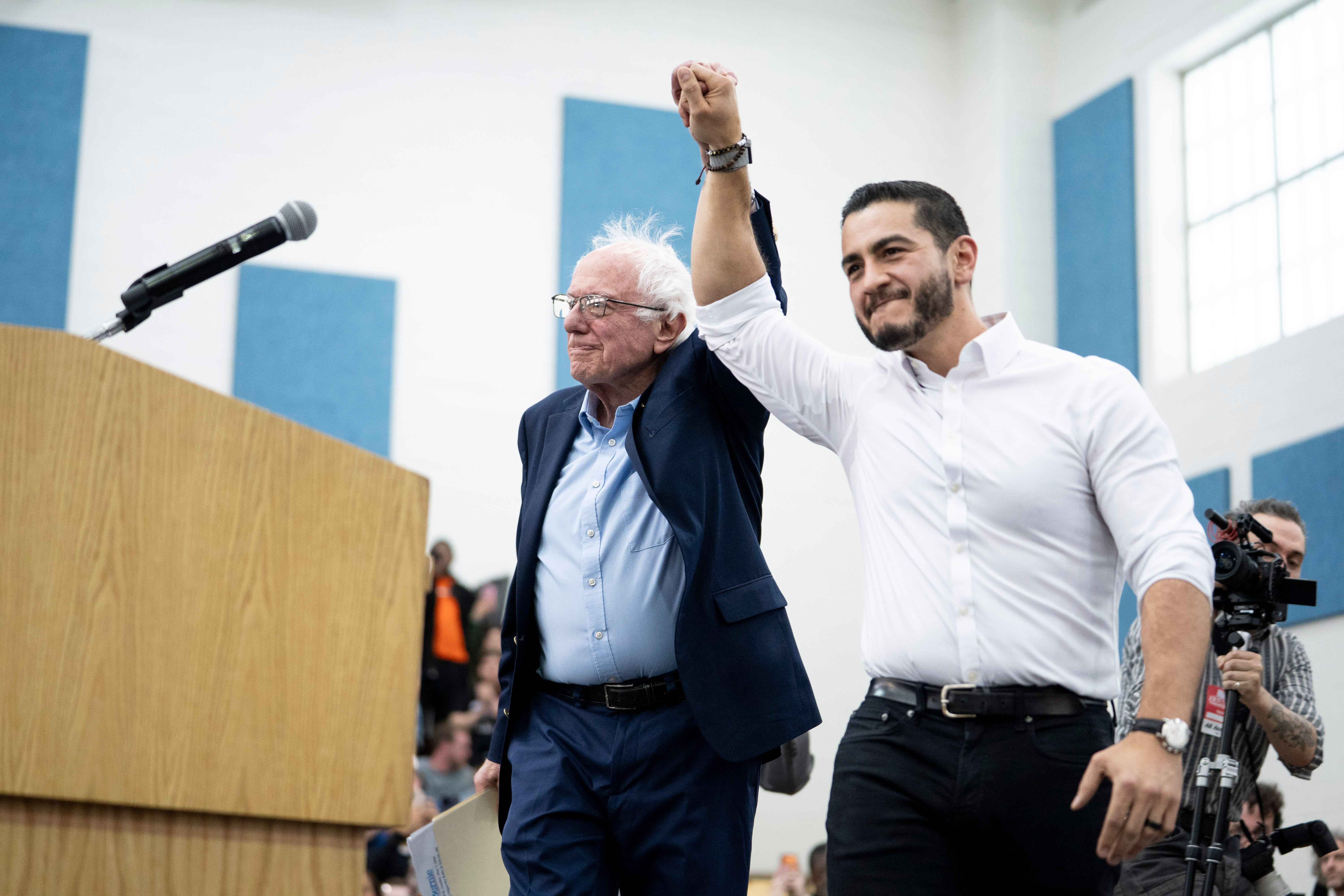
El-Sayed, on the other hand, has picked up endorsements from Alexandria Ocasio-Cortez and Bernie Sanders. He’s also highly critical of Israel.1 “For too long, our foreign policy has been handed to us by the likes of the state of Israel and AIPAC, who has made sure that Democrats and Republicans are doing their bidding,” he said in a debate with Stevens on July 7. For his part, El-Sayed has even criticized Obama’s tendency to compromise.
If this dynamic sounds familiar, that’s because we’ve seen it play out across the country in Democratic primaries this cycle. And so far it’s mostly gone the same way. Everywhere from New York City to Colorado to, yes, Maine, progressive outsiders have been trouncing safer establishment picks.2 Is it a Democratic Tea Party? I’ll leave that for another column. But all the signs of this pattern continuing in Michigan are there. McMorrow started tanking in the polls shortly after she criticized El-Sayed for campaigning with left-wing influencer Hasan Piker, whom she called “a provocateur, to put it lightly, who says things that are misogynistic and antisemitic, and said that the United States deserved 9/11.”
Even Stevens took steps to distance herself from Israel’s government in her latest debate with El-Sayed. After Israeli Prime Minister Benjamin Netanyahu criticized her on CNN, she said he has “not made us safer, has not brought us closer to peace. And he’s endangered Jews here in America and around the world.” But is that too little too late to stop populists from racking up another victory? And if El-Sayed does win the primary, could that sink Democrats’ chances of retaining the Michigan seat, and, by extension, of reclaiming the Senate?
Are progressives cruising to another victory in Michigan?
The basic El-Sayed skeptic’s position is this: Michigan isn’t New York City. You still need to win the general, and El-Sayed’s progressive issue positions are too far left for a state Donald Trump has carried twice. Stevens has made that same case. Aside from run-of-the-mill progressive stances like Medicare for All, El-Sayed supported defunding the police back in 2020. He also voted “Uncommitted” during the 2024 presidential primary as a form of protest of the Biden-Harris campaign.3
One could also cite misgivings that voters might have about “outsider,” lefty candidates after the Graham Platner disaster, but the comparison isn’t fair to El-Sayed. His credentials are impressive, from being a Rhodes Scholar and a star student-athlete to the Health Director of Detroit. He’s also run for office before, having finished a (distant) second in the 2018 gubernatorial primary against Gretchen Whitmer. His biggest scandal is calling himself a physician while never having completed a residency or being licensed to practice medicine. He can be extremely combative, however, and confident to the point of overconfidence — perhaps fittingly, since he hosts his own podcast.
But despite what could easily be considered baggage in a purple state like Michigan, El-Sayed was the clear favorite to win the primary before McMorrow dropped out. Prediction markets saw him as the third-place candidate early in the race, but he’s been on an upward trend since April. Prior to McMorrow’s exit, Polymarket gave him an 85 percent chance to clinch the Democratic nomination.
This was a case where the polls and betting markets aligned. The three most recent Michigan Democratic primary polls in the New York Times database before McMorrow dropped out were El-Sayed +5, El-Sayed +19, and El-Sayed +7. In fact, the last poll prior to McMorrow’s exit where El-Sayed wasn’t leading came back in May. And polling averages of the race only showed El-Sayed’s lead increasing in June.
That’s not entirely surprising. The war in Gaza has become an important issue in Democratic primaries, and Michigan has the largest population of Arab Americans of any state in the U.S., per capita. That group swung away from Democrats in 2024, at least in part due to criticism of the Biden-Harris administration’s approach to Israel. In Dearborn, which has the largest Arab American population share in the country, Trump won 42 percent of the vote in 2024, compared to 37 percent for Harris, and 18 percent for Jill Stein. El-Sayed could bring some of these voters back into the Democratic fold.
But perhaps McMorrow’s departure has given moderates a second chance. What if 80 percent of McMorrow voters flocked to Stevens? The race would get competitive. In fact, that would be enough to put her ahead if you take an average of all pre-dropout polls. But that approach gives a lot of consideration to older polls, conducted before El-Sayed really took off. If you downweight older polls, El-Sayed improves to a 42-40 lead even with just 20 percent of the McMorrow vote.
But post-dropout polls are more promising for Stevens. The first, conducted by Tavern Research, found El-Sayed up by 3 points when all three candidates were included on the ballot, but Stevens ahead by 1 point in the two-candidate matchup.4 Nearly every former McMorrow supporter in that poll moved to Stevens. And this week, a Glengariff/Detroit News poll showed Stevens leading with 48 percent of the vote to El-Sayed’s 41 percent.5
The new polls seem to indicate that the race has tightened. Part of that could come down to Stevens drawing support from more former McMorrow supporters than early polls suggested. Or perhaps the Platner fiasco is boosting moderates’ morale just a bit. Those Obama ads might even matter; Stevens held a large lead among Black voters in the Glengariff poll.
The Peters endorsement, which came after the Glengariff poll, could help, too. Endorsements aren’t usually decisive, but receiving the nod from the two-term incumbent of the seat you’re trying to win is a real “get.”
However, a Data for Progress poll showed almost the complete inverse result: 54 percent for El-Sayed compared to 41 percent for Stevens. But that poll was commissioned by American Priorities, a pro-El-Sayed super PAC. In general elections, candidate-sponsored polls typically exaggerate their candidate’s standing by a margin of about 4 points. We don’t have a comprehensive database of internal polls in primary elections, so we can’t say what the average bias is there, but the Data for Progress poll is showing a divergence from public polls large enough that the firm is putting its credibility on the line.
Would El-Sayed make Michigan competitive in November?
Michigan is a must-win for Democrats if they want to retake the Senate. It’s also an open seat in a year where the national environment should be good for Democrats. True, Trump has won the state twice, but they were narrow victories. This isn’t a scenario where you want or need a high-variance candidate.
Instead, you’d want someone with minimal potential downside who can coast to an easy win on anti-Trump vibes and solid campaigning. Stevens would seem to fit that bill. She’s not an electoral superstar (her Split Ticket WAR scores range from R +0.9 to D +2.8), but she’s not an underperformer either. Being a generic normie Democrat might make things harder in a primary, but it’s a boon in a general where even a neutral performance would likely net you the win. Our forthcoming forecast would also give Stevens some extra credit for held elected office when El-Sayed hasn’t. That’s not to say El-Sayed can’t win, but he’s certainly the riskier choice.
However, Democratic primary voters aren’t just optimizing for electability. While 25 percent of likely Democratic voters in the latest Glengariff/Detroit News poll said the top quality they’re looking for in a nominee is someone who can win in November, 38 percent said it was the nominee being a fighter who would stand up to Trump. If you’re looking for an anti-establishment fighter, El-Sayed is the obvious choice. The bet is that perhaps El-Sayed’s more left-wing views cost him some support relative to Stevens, but his odds of winning are still solid in this Michigan environment, and if he does, Democrats will get a Senator who better aligns with the party’s changing priorities. El-Sayed would also be the only Arab American in the U.S. Senate.
But that’s all very vibes-forward. The data tells a somewhat different story. If you take a simple average of all Michigan general election polls conducted this year, there’s essentially no difference: Stevens’s average margin against presumptive Republican nominee Mike Rogers is D +0.7 compared to El-Sayed’s D +0.2. However, El-Sayed outperformed Stevens in three of the five most recent polls, and they performed equally well against Rogers in a fourth.
On the other hand, one could argue that there is a pollster quality issue here. Michigan pollsters have a mixed track record. The only pollsters in this group with an A/B rating or higher are TIPP Insights, Glengariff Group, and Emerson College. Polls from those firms show Stevens leading Rogers by an average of 2.8 points, but El-Sayed trailing him by 2.5 points.
So … not to rehash the Moderation Wars for the umpteenth time, but this one comes down to your priors. If you think more moderate candidates generally outperform left-wing candidates, you can cite evidence from the higher-quality polls demonstrating that Stevens is the safer choice. If you don’t, you can emphasize recency instead, since the latest polls generally show El-Sayed doing at least as well in November.
There’s also a chance that the electoral environment will be blue enough by November that it won’t matter. Michigan is a truly purple state: Trump carried it by about 1.4 points in 2024 while Biden won it by 2.8 points four years earlier. But as of this post, our generic congressional ballot average is sitting at D +6.1. If that’s what the national environment looks like in November, you’d also expect the Michigan environment to be around D +6.1 according to our state-level benchmarks.
So even if El-Sayed underperforms, he’d have to underperform in a big way to lose Michigan in this environment. That’s not impossible, but just 23 percent of races in the Split Ticket WAR database (which runs from 2014 through 2024) feature a candidate under- or overperforming by more than 6 points.6 And many of those races featured consistently strong incumbents — such as Susan Collins, Jon Tester, and Joe Manchin — or consistent underperformers like Ilhan Omar. An open-seat race doesn’t fit that bill, especially because large over- and underperformances are simply rarer than they used to be.
If El-Sayed wins the primary, the general election is likely to be seen as a referendum on the electoral viability of populist, left-wing, Israel-skeptical candidates. An El-Sayed win in November will be taken by many as a sign that the progressive populist wing of the party is fully in control. But if El-Sayed loses, that same movement will potentially take the blame for costing Democrats the Senate.
In fact, according to data from The Argument’s Milan Singh, more than half of El-Sayed’s fundraising emails have mentioned Israel, Palestine, or Gaza.
Here, trouncing refers to winning primaries. Insurgents’ track record for not crashing and burning post-primary is less stellar.
He did eventually endorse Harris, and is even running ads reminding voters of that fact to distance himself from the Uncommitted Movement.
Note that while McMorrow has withdrawn from the race, her name will still appear on the primary ballot.
A pro-El-Sayed PAC showed El-Sayed 20 points ahead of Stevens with McMorrow off the ballot. But that poll was conducted pre-dropout.
Indeed, these large overperformances may have become less common over time. In 2024, only 13 percent of races in the Split Ticket database featured a >6 point overperformance, although there tends to be slightly more ticket-splitting in midterms than in presidential years.
Michigan does have the largest Arab American vote in the country, but it also has a large moderate Jewish vote outside of Detroit. Those voters are traditional Democrats but I think many would crawl over glass to vote for Mike Rodgers against El Sayed. Feels like this race is going to be really tough no matter the outcome because it alienates parts of the Dem base no matter what.
Im really worried that if Stevens wins, young people just wont show up for her. Im pretty young and progressive but even pretty moderate young people I know seem to just hate her, and I really think that could swing not only the senate race but many house races too (Tom Barret's swing district, for example, is centered on Lansing, right beside MSU, a major university!)