

What to make of Michigan
Abdul El-Sayed’s apparent victory is a big win for the left — but a disaster for polling and a case study in poor expectations management.

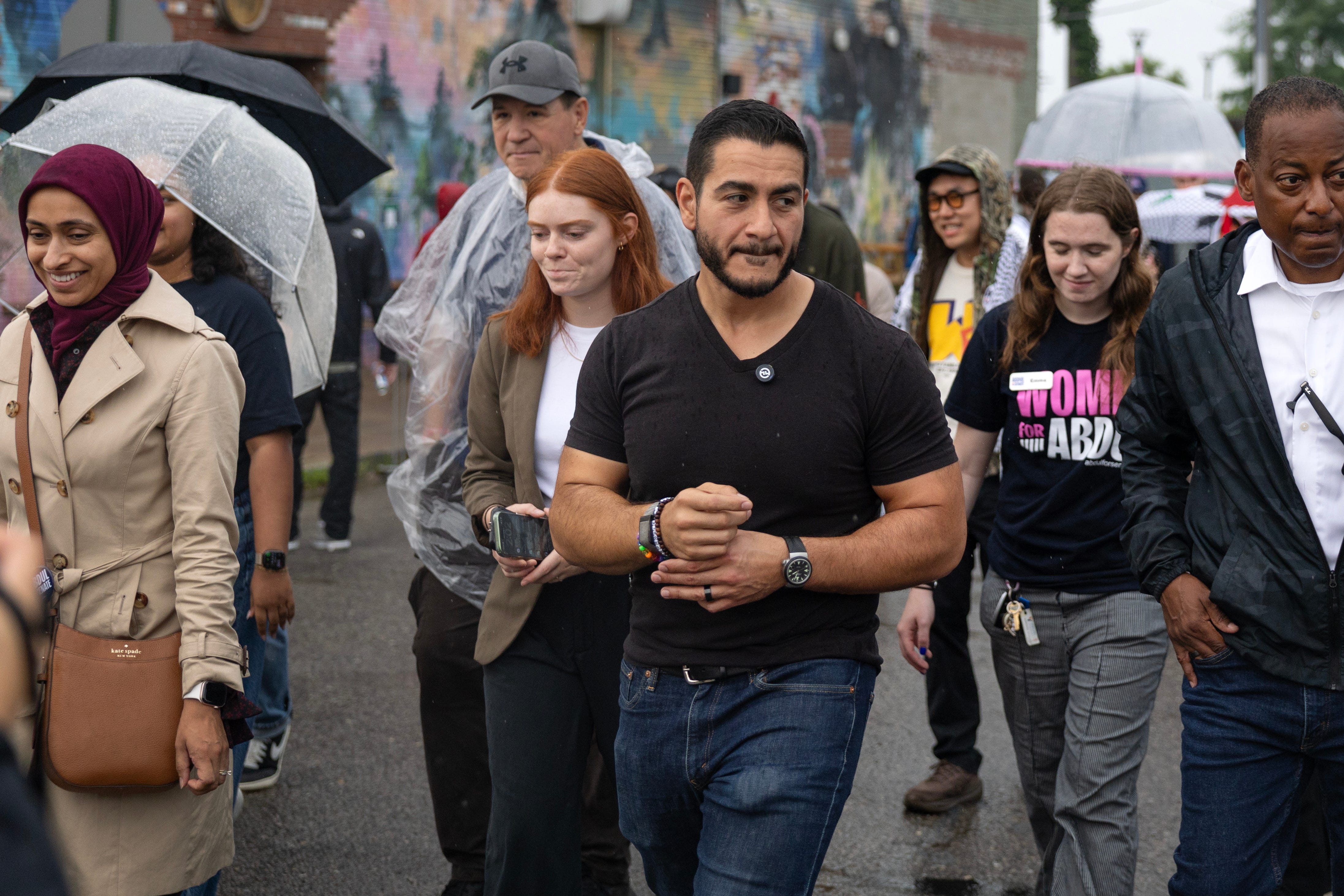
It’s just past 4 a.m. here on the East Coast, and as I write this, Abdul El-Sayed leads Haley Stevens by only 1.4 points in the Democratic primary for U.S. Senate with 95+ percent of the vote counted in Michigan. The margin is narrow, but when there aren’t a lot of votes left, will be hard for Stevens to make up. El-Sayed has been declared the winner by NBC News, and is considered the almost certain victor by prediction markets, but other news outlets haven’t called the race yet. I’ve never been much of an election night modeling guy — my whole thing is pre-election forecasts — so I’m not going to offer an opinion about whether NBC and the prediction markets got ahead of themselves. Most of you will probably read this in the morning, and the results may be clearer by then, but the points I’ll make in this newsletter aren’t particularly contingent on the exact final result.
However, this is one of those cases where the headline doesn’t tell the whole story. A 1- or 2-point win for El-Sayed would be much narrower than the results predicted by polls; the last seven surveys of the race as tracked by the New York Times had El-Sayed up by margins ranging between 10 and 19 points. I will note that an earlier Glengariff Group poll had Stevens ahead by 7, which is actually likely to end up closer to the end result than most of the other surveys, though it was pretty far off, too.
I’ve been putting the finishing touches on our midterms model, and that’s been going well; it should launch (early) next week. But I wrote some notes to myself while following Michigan in the background over the course of the evening. Considering the hour, I’m mostly just going to reproduce those with some uncharacteristic brevity.
11 quick thoughts on the Michigan result
We should start by acknowledging that an El-Sayed win by any margin is a significant accomplishment. It’s not exactly surprising, given the success of more progressive candidates elsewhere and that he’s been ahead in the polls for a couple of months now. But this is a guy whose only previous attempt at elected office resulted in a 22-point loss to Gretchen Whitmer in the 2018 Michigan gubernatorial primary. Michigan, where I’m from, isn’t New York City or some super liberal district in Colorado. This is a big W for progressives in a purple state.
With that said, I think AES and some of his supporters are guilty of managing expectations very poorly. Some of the polls I mentioned were from firms affiliated with El-Sayed’s campaign. I don’t understand the utility of publishing internal polls showing yourself ahead by double digits — personally, if I ran a campaign, I’d make it a strict policy to never release internal polls, which are often highly misleading. And if you’re going to do that, you probably ought to come closer than within ~10 points of the actual result. El-Sayed has also predicted a big win for himself against Mike Rogers, who won the Republican nomination uncontested tonight, but who is a relatively moderate Republican for the Trump Era. As someone who can be a little trollish himself, and is sometimes accused of being cocky, I’ve kind of vibed with AES’s confidence on some level, but I’m also not running for office and would be a terrible candidate if I did.1
In presidential primaries, results relative to “expectations” matter a great deal. Indeed, you can literally even model this, as we did in 2020. If AES had been going against Stevens in the New Hampshire primary, and had been favored by 13 points in polls but won by 1 or 2 instead, his chances of eventually becoming the Democratic nominee would probably have declined tonight, because the 1 extra delegate he won or whatever would be outweighed by the perceived loss of momentum and the message that donors, the media, etc. took from that. Primaries for Congress don’t work that way: there’s no runoff in this race, no second chance for Stevens next week. Still, this race has big implications for how Democrats will navigate the political landscape going forward, including specifically in 2028. I’ve generally been bullish about the left’s chances in 2028. But the way this went down won’t provide the morale boost that a bigger win might have.
Instead, a very narrow AES win is in the sweet spot of the “second-guessing zone” for the Democratic establishment. Instead of accepting that they have a lot of problems, they’re going to ask what they might have done differently. Mallory McMorrow actually got 4 percent of the vote despite dropping out (so El-Sayed isn’t likely to hit 50 percent). What if she had endorsed Stevens? Or what if she had been the nominee? With some very notable exceptions such as Michigan Gov. Gretchen Whitmer, a lot of the Democratic establishment, including Michigan incumbent Sen. Elissa Slotkin, stayed on the sidelines in the race.2 I don’t necessarily know that their endorsements would have helped Stevens, especially since a lot of El-Sayed’s rhetoric was about how the Democratic establishment, AIPAC and wealthy donors had been putting a heavy finger on the scale.3 But the establishment might regard this as a game in which they took the starters out at halftime, and almost won anyway, rather than one they were destined to lose the whole time.
It’s clear that progressives are rising in the Democratic Party overall. But it’s also clear that there’s a fair amount of race-by-race variance. Just tonight, in Missouri’s 1st congressional district, former Squad member Cori Bush lost to a moderate Democrat by 22 points in a comeback bid, while one of the most moderate Democrats in the House, Marie Gluesenkamp Perez, easily advanced to the general election in Washington’s 3rd district. Roy Cooper is the Democratic nominee in North Carolina, and that hasn’t been particularly contentious. The media likes simple narratives, and “progressives rising” is by no means wrong, but nobody should be bending the knee at this point.
With that said, there’s a fair amount of cope in establishment circles too. Stevens loses? Well, a lot of establishment types will just assert that she was a bad candidate. Andrew Cuomo? Bad candidate. Janet Mills? Bad candidate. These things are rarely so obvious in advance, though. Stevens won election to the House four times in a suburban Detroit district with perfectly normal margins, for instance.
Prediction markets have an increasing tendency toward overconfidence. In my chat with Eli on Sunday, I said explicitly that giving Stevens only a ~2 or 3 percent chance was too low, given that polls in Congressional primaries are often wildly off. Historically, in gambling-adjacent activities, there’s a bias toward longshots. But I think that may have flipped in the other direction given all the attention given to prediction markets and that people tend to treat them as oracular when they shouldn’t, perhaps producing some self-reinforcing feedback loops.
Just to put a finer point on this, the average error in polls in presidential primaries since 2000 is around 9 points of vote margin (!), more than twice President Trump’s (in)famous polling outperformance in 2016. And polling error tends to increase the further you go down the ballot. So if it’s 9 points in a presidential primary, it might be who-knows-what in a congressional primary, but we’re probably looking at something in the double digits.4 Many people, including traders at prediction markets, tend to be much too crude in the heuristics they apply toward polling error, failing to recognize that polling is relatively accurate in some types of races but routinely quite inaccurate in others and that much of this is predictable.
Further, the whole trajectory of polling in this race was weird. At one point, the McMorrow campaign successfully pressured a small news outlet into quashing a poll that showed them way behind. At another point, El-Sayed falsely accused a different pollster that had Stevens narrowly ahead of having been funded by AIPAC. Many of the pollsters in this race have mediocre pollster ratings, aren’t rated at all because they’re new, or aren’t used by Silver Bulletin because they don’t meet our standards for professional polling firms. There can sometimes be cases of the blind leading the blind in polling, producing a lot of herding toward a sometimes very wrong consensus. The constant, frankly often very amateurish “discourse” about polling on Twitter and elsewhere on social media doesn’t help matters either. There are fewer and fewer pollsters I trust to do their own thing, instead of being influenced by “the narrative”.
With that said, Congressional primaries are hard to poll, and Michigan is a particularly hard state to poll for various reasons. Among them: a) Stevens’s best groups were probably rural white voters and working-class Black voters, two groups that are notoriously hard to reach in surveys; b) AES was counting on big turnout from younger voters, but they often don’t turn out in big numbers in primaries; c) I think it’s pretty clear that AES had the more enthusiastic supporters, but this is a mixed indicator because of non-response bias: more enthusiastic voters might be more likely to vote, but may also be proportionately even more likely to participate in surveys when what you might call “Shy Stevens” voters don’t; d) Michigan has a reasonably large Arab-American population, but not large enough to yield a reliable crosstab in (say) a 600-person survey, so instead Arab-Americans routinely fall between the cracks in opinion research.
Tonight is probably bearish for Democrats in the general election, but I wouldn’t overstate that. I’ve always thought people are too eager to derive implications about general election strength from primary results. Part of the reason that Democratic voters are moving to the left is that moderate voters are leaving the party, and AES will need to win them in the general election. If you’re a Silver Bulletin reader who happens to be a Democrat, one positive would be if El-Sayed takes tonight’s results as a signal that he needs to be more conciliatory between now and November.
Thanks for reading, and look for the model next week.
Other than by being an eager consumer of greasy local foodstuffs.
Although maybe that’s one reason AES published those highly inaccurate internal polls: they might have bluffed some potential Stevens endorsers into staying on the sidelines. To a first approximation, you’ll be a better consumer of political news if you ignore internal polls.
If El-Sayed had won big tonight, my planned “take” was going to be about whether the Whitmer endorsement had backfired.
Polling averages, as opposed to individual polls, are associated with lower error, but that advantage diminishes if there’s a lot of herding and everybody is saying the same thing. See the next bullet point.
re: "if El-Sayed takes tonight’s results as a signal that he needs to be more conciliatory between now and November."
his semi-victory speech seems to be a positive sign toward this:
“However we might feel about the campaign we’ve just come through, I want you to understand that it pales in comparison to the cynicism, in comparison to the corporatism, in comparison to the lies that Mike Rogers and Donald Trump are going to tell,” El-Sayed said. “However much we might disagree with our democratic opponent, there is so much more that unites us than divides us. Tomorrow, we begin to mend fences,” he said. “Whatever happens tonight, we have a responsibility to assure that we unite to make sure that Mike Rogers never sees the inside of the U.S. Senate."
It'll be interesting to look at the demographics. My guess is that young voters went heavily for El-Sayed, while the older voters went for Stevens. As Nate says at the end of his post, in order to defeat Peters in what seems likely to be a close election, El-Sayed is going to have to take significant steps to reassure the Stevens voters that he's not too far to the left. That may be difficult, given the contentiousness of the primary.