

Gas prices are set to go vertical
It's not exactly a bold prediction to suggest this will be bad for Trump's political standing.

This is going to be one of the shorter newsletters in recent Silver Bulletin history. My main mission for the next week is to finalize our NCAA tournament forecasts.1 But as you might have noticed, there’s a lot going on in the world. And there’s a story that seems very likely to become a major part of the political conversation while the tournament is underway.
As the headline suggests, it’s gas prices. Although the United States is less reliant on foreign oil than it once was, the war in Iran could be a perfect storm for gas and energy prices in the U.S. and elsewhere to spike.
Iranian production of oil is severely disrupted, of course, with the U.S. and Israel attacking the country’s fuel infrastructure. But Iran itself isn’t that large a supplier of oil. Estimates vary from source to source, but it was something like the 6th to 8th largest producer in 2024, extracting 4 to 5 percent of the world’s oil.
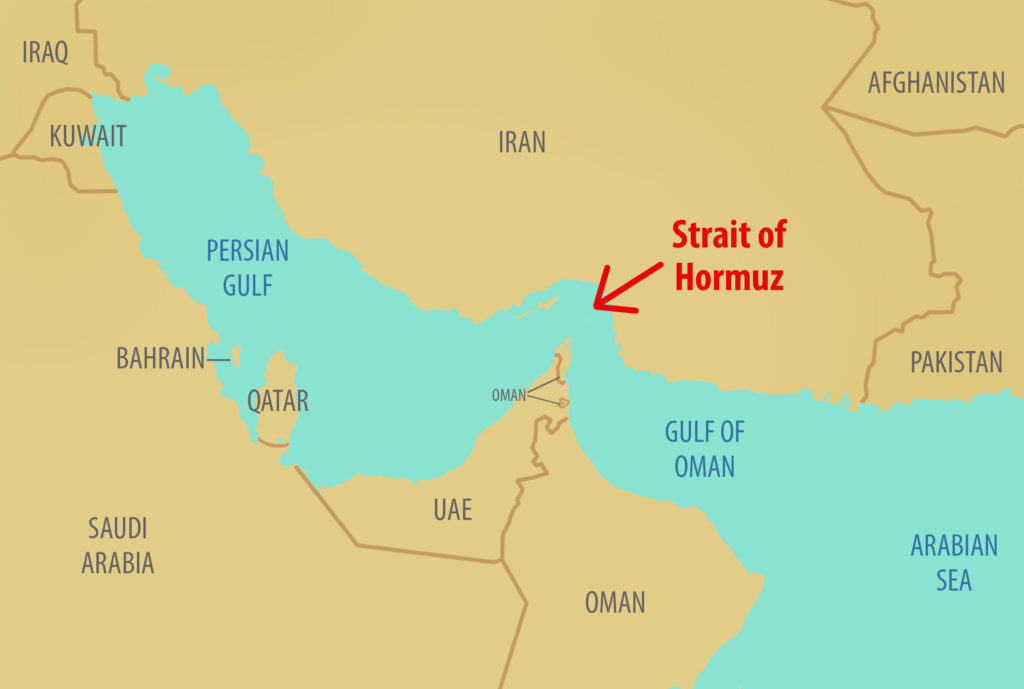
However, there are two other problems downstream from cutting off Iranian production. One is that Iran has retaliated by attacking oil production facilities in other Gulf States. The other is that the Strait of Hormuz is essentially shut down to shipping traffic. Saudi Arabia, the U.A.E., Iraq, Kuwait, Qatar, Oman and Bahrain, combined with Iran, collectively provide about 30 percent of the world’s oil.
According to the AAA, average retail gas prices in the U.S. are now $3.45 per gallon, up about 50 cents from a week ago. However, the problems are likely to worsen significantly as supply chains are disrupted. Traders at Polymarket anticipate that the most likely range for gas prices to land by the end of March is between $4.50 and $5.00. And although there’s a wide range of uncertainty, there’s a 41 percent chance they exceed $5.00 by the end of the month. The all-time record, according to the EIA, was $5.01 in June, 2022.
Americans are used to gas price fluctuations, but it’s not all that common for prices to go quite this vertical in the span of a month:
So far, as Eli wrote at our Trump tracking page, there hasn’t been much of a shift in the president’s approval ratings. The war is broadly unpopular in polls, but Trump was unpopular to begin with. Unlike something like Venezuela, however, this isn’t some sort of surgical strike. It’s not at all clear what the U.S. and Israel even want to achieve.
Trump’s nonchalance about all of this won’t help him either. He literally campaigned on lower gas prices in 2024, and inflation was a substantial factor in his defeat of Biden. The sharp rise in gas prices in late spring and early summer 2022 was associated with a noticeable decline in Biden’s approval ratings from the 40s into the high 30s. It all would seem to follow a classic script of how second terms can turn into lame duck presidencies.
Next Sunday is Selection Sunday, but we’re also hoping to launch our new NCAA ratings, which we’re calling COOPER, by midweek.
It also doesn’t help the Trump thinks fossil fuels are the future, yet simultaneously he’s demonstrating how sensitive oil is to geopolitical shocks.
Gas prices are going to get bad,
but what most politicians are missing in this moment is that the price of gas is secondary to the price of Diesel,
which is rising faster than gas right now because companies do not view truckers and utilities the same as consumers.
But Diesel price is a tax added to every physical thing we buy or use.
Normally I would say this is a pedantic point, but the fact that Diesel appears to be rising at roughly 137% the rate of gasoline means that the specificity is vital here.