

The sad and self-inflicted decline of the Washington Post, in one chart
Under Jeff Bezos, the paper retreated from the adversarial, anti-Trump posture that helped fuel its growth. And now its influence has fallen sharply.

UPDATE Feb. 4: Today, the Washington Post announced that it was laying off more than a third of its staff. This is a truly devastating round of cuts. The entire sports staff has been let go or repurposed, for instance, even in a week that features the Super Bowl, the Winter Olympics and a huge Washington Wizards trade. Our hearts go out to everyone affected. But this is also a story of American citizens becoming less well-informed. The rest of the text in this article is unchanged from the original publication on Jan 27.
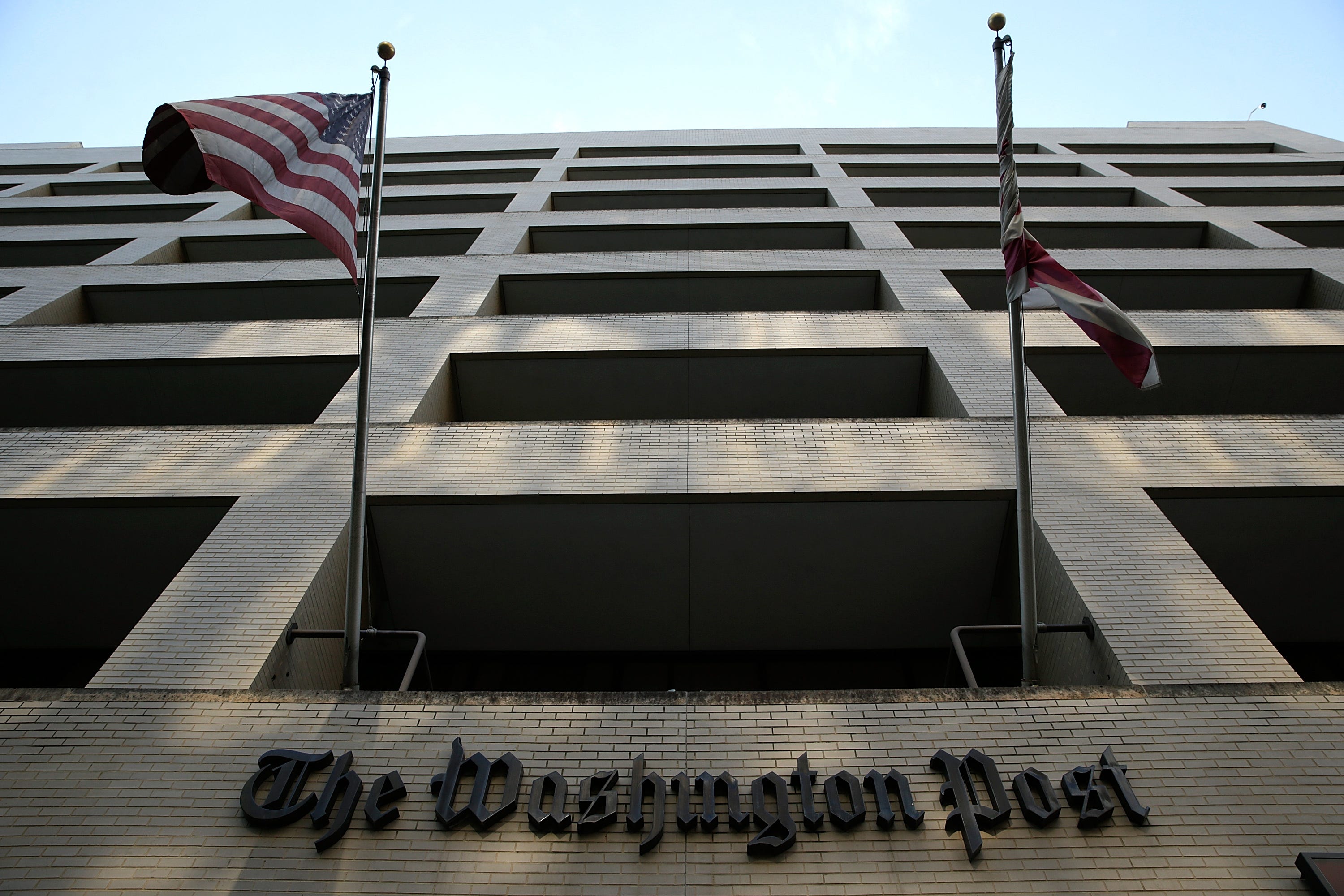
The Washington Post, one of the very small handful of true newspapers of record in the United States, is reportedly considering a major round of layoffs. There have been ominous signs, such as the Post cancelling plans to send its reporters to the Winter Olympics (it later reversed the decision). Because the Post has been private since Amazon founder Jeff Bezos purchased it in 2013, there isn’t much reliable data on its financial condition.
However, there are various ways to measure what platforms and publishers are gaining or rising in influence. Dirty little secret: sometimes I’ll make a chart or two, and that will be the basis for deciding whether it’s worth publishing a newsletter on a given subject. This is a case where the chart tells pretty much the whole story unto itself:
This is data that I gathered from the news aggregation site Memeorandum, which algorithmically tracks which news and politics stories other people are linking to. Memeorandum has been around for almost 20 years now, and while I have some esoteric critiques of its algorithm that aren’t worth getting into, it’s a good way to monitor which stories are getting traction. It also has a longstanding leaderboard that shows how many stories originate at a given news outlet.
Over the past 30 days, for instance, about 14 percent of Memeorandum headlines — again, these are the stories that other people are linking to and talking about — originated at the New York Times, the highest for any news outlet. Another way to think about this is that the New York Times has about 14 percent of the overall “mindshare” for U.S. politics news coverage.
Note that I said “U.S. politics news coverage”; Memeorandum usually won’t pick up stories in sports, culture, international news, etc.; basically, “just” politics or hard news stories that have clear political implications. For instance, their #2 outlet right now is Politico, which pretty much only publishes in this category.
But this ought to play into the strengths of the Washington Post, a brand leader in its coverage of American politics since the Watergate days. But where is the Post? A distant fourth, with only about 5 percent of mindshare, about one-third as much as the NYT.
And as you can see from the chart, this is a rather abrupt change. Four years ago at this point, the Post actually ranked a bit higher than the Times by the same measure.
Even in the pre-digital era, the New York Times was always a little bigger and certainly broader in its coverage than the Post, and this carried over into the late 2000s and early 2010s, when Memeorandum’s tracking begins. However, Donald Trump’s 2016 election was a boon for many publishers, especially those focused on American politics and who provided original reporting on hard news. The Post had a particularly steep increase in the Memeorandum data, catching up to and sometimes exceeding the Times in U.S. politics coverage, while its digital subscriptions roughly doubled during Trump’s first term.
The Post and Times both remained relatively strong during the first two years of Joe Biden’s term in office — though keep in mind there was plenty of hard news during this period, especially the COVID pandemic. By the end of Biden’s tenure, however, the relative influence of both publications was waning, perhaps part of a broader vibe shift in news coverage against the center-left consensus that I’ve sometimes called the Indigo Blob.
Now is not really the time or the place to provide an editorial critique of the Post’s coverage during this period. I have friends and former colleagues at the paper and I am deeply sympathetic to anyone whose job is threatened there.1 (Full disclosure: there were discussions between FiveThirtyEight and the Post at various points about a sale or collaboration. We had conversations with many news outlets over the years, but the Post was noteworthy for always being extremely professional, and I don’t have any hard feelings. FiveThirtyEight also partnered with the Times from 2010 through 2013, and I occasionally write freelance articles for the Times now.)
The Times experienced significant internal strife in 2020, culminating in the forced resignation of editorial page editor James Bennet for publishing an editorial by Republican Senator Tom Cotton headlined “Send In The Troops”. I’d argue, however, that the Post leaned further into its anti-Trump coverage than the Times did and was more discernibly left-wing — perhaps “woke” — especially on coverage of topics like tech.
But then in October, 2024, Bezos quashed the paper’s planned endorsement of Kamala Harris. While I’m sympathetic to the idea that news outlets should not endorse political candidates — much of the audience doesn’t understand the firewall between news and opinion pages — the timing was poor, and it understandably played into concerns about the increasing assertiveness of billionaires seeking to curry favor with the Trump administration and protect their financial interest. Around 250,000 people cancelled, about 10 percent of the Post’s digital subscriber base. Since then, the Post has also fired or let go many of its liberal columnists (some of whom wound up on Substack), replaced its leadership team with a goal of championing “personal liberties and free markets,” and has also seen a massive exodus from traditional news reporters.
There’s nothing wrong with personal liberties and free markets; I’m a fan of these things myself. Perhaps an explicitly centrist or center-right outlet could be a good business if it were starting from scratch; this is arguably something of a blind-spot even as the center-right has been hollowed out, either joining Team MAGA or Team Democrat. But it’s understandable that many subscribers felt betrayed. The Post rebuilt its brand from subscribers who wanted unflinching coverage of Trump, and then it pulled the rug out. And it doesn’t provide as much coverage in areas ranging from culture to real estate to Wordle that have long been profit centers for the Times.
And now it’s paying the price for that.
Personally, if I were a centibillionaire, I’d buy a sports team rather than a newspaper; that sounds a lot more fun. But it’s hard to understand what Bezos thought he was getting into. The Post is reportedly losing lots of money. But it’s still a rounding error for Bezos, and if you lose 10 percent of your subscribers overnight for a business with a large cost base, it’s naturally going to create problems. And Times has consistently turned a healthy operating profit.
The fracturing of the media ecosystem has produced winners (including Substack, certainly) as well as losers. And outlets like the Wall Street Journal frequently provide excellent political coverage, in addition to their coverage of financial markets. But local and regional news coverage has been hollowed out. It would be good to have at least a handful of truly muscular national news outlets to complement all the niche publishers and opinion sites. We may be increasingly heading to the point where there are just one or two truly comprehensive national news brands, and a long tail of everything else.
We have an open job listing for an assistant editor that we’re now reviewing applications for; the deadline has passed but we’ll certainly make an exception if you’re facing an impending layoff.
I subscribed after the 2016 election because, you know, “democracy dies in darkness”. I cancelled after Bezos decided to kneel at the altar of Trump. Don’t regret either choice.
Hiring a British tabloid editor, particularly one with ties to past scandals there, as publisher was also an extraordinarily bad idea.