

A bigger World Cup is a better World Cup
This tournament has been great so far. But 48 teams create an awkward bracket. A 64-team World Cup is the inevitable outcome — and maybe the better one.

I know we’ve been sports-heavy lately, but I’ll be doing a Substack Live with Seth Masket tomorrow at noon about his new book on the Republican Party.
We’re also very overdue for the next SBSQ, so I’ll try to find a morning here soon for a lightning round edition. That does mean, however, that there’s still time to submit questions in the comments section of SBSQ #31.
I spent a few days at the Winter Olympics in Milan this February. It was a relatively spontaneous decision; I had to be in Europe anyway. Attending wasn’t exactly cheap, but cheaper than we expected.1 We saw the men’s hockey semifinals2 — but one of the top sporting experiences of my life was watching Alysa Liu win the gold medal. I’m not a figure skating guy at all, but it was absolutely thrilling, and much better live than with the commentators snarkily talking over the performance on TV.3
The Women’s Free Skate is a long day, though — four hours and change from start to finish, basically 80 percent of which involves skaters who have literally zero statistical chance at winning.4 Nevertheless, I was struck by the poise of every competitor — most of them teenagers, out there completely alone — in what was undoubtedly a moment they’ll remember on their deathbeds. Being the best skater in, say, Estonia or Kazakhstan is an achievement unto itself, and the crowd reacted with great admiration, tossing flower bouquets and stuffed animals onto the ice.5
The World Cup is good, actually
Anyway, soccer’s World Cup is here in the United States. (And Canada and Mexico.) This plug is about as subtle as a FIFA “hydration break”, but quite a lot of you have subscribed to our World Cup forecast, and we really appreciate that…
I think it’s been an outstanding tournament so far, even as the narrative has shifted from a Day of Draws on Monday to a Day of Dominance on Tuesday. The tournament is averaging 3.1 goals per game so far, the most since the 1958 edition. And plenty of them have been from the world’s greatest players. If you’re even remotely a sports fan, how can you not be excited when Mbappe and Haaland both score a pair of goals — and then Messi tops them both with a hat trick?
There is, however, considerable debate over whether FIFA undermined the tournament by expanding from 32 to 48 teams.
Economically, this was obviously the right move. Despite some initial, basically reasonable skepticism about how FIFA was pricing tickets, the World Cup is just about the most popular product imaginable, and it only happens once every four years. Even games like Austria-Jordan are selling out, or coming very close to it. If products are flying off the shelf, you expand inventory. It would be completely irrational not to do that.
I’m not, by default, a maximalist. Our philosophy at Silver Bulletin is very much that more isn’t always better. And that goes for sports, also. I absolutely hate the NCAA tournament’s decision to expand to 76 teams, for instance. Look for a rant about that next March.
Nor does it increase the pool of potential winners. The teams ranked #33 through #48 in our initial World Cup projections — basically the beneficiaries of the expanded field — had a combined chance of about 0.2 percent of winning the tournament. Even the United States was by far a better bet than the entire bottom third of the field.

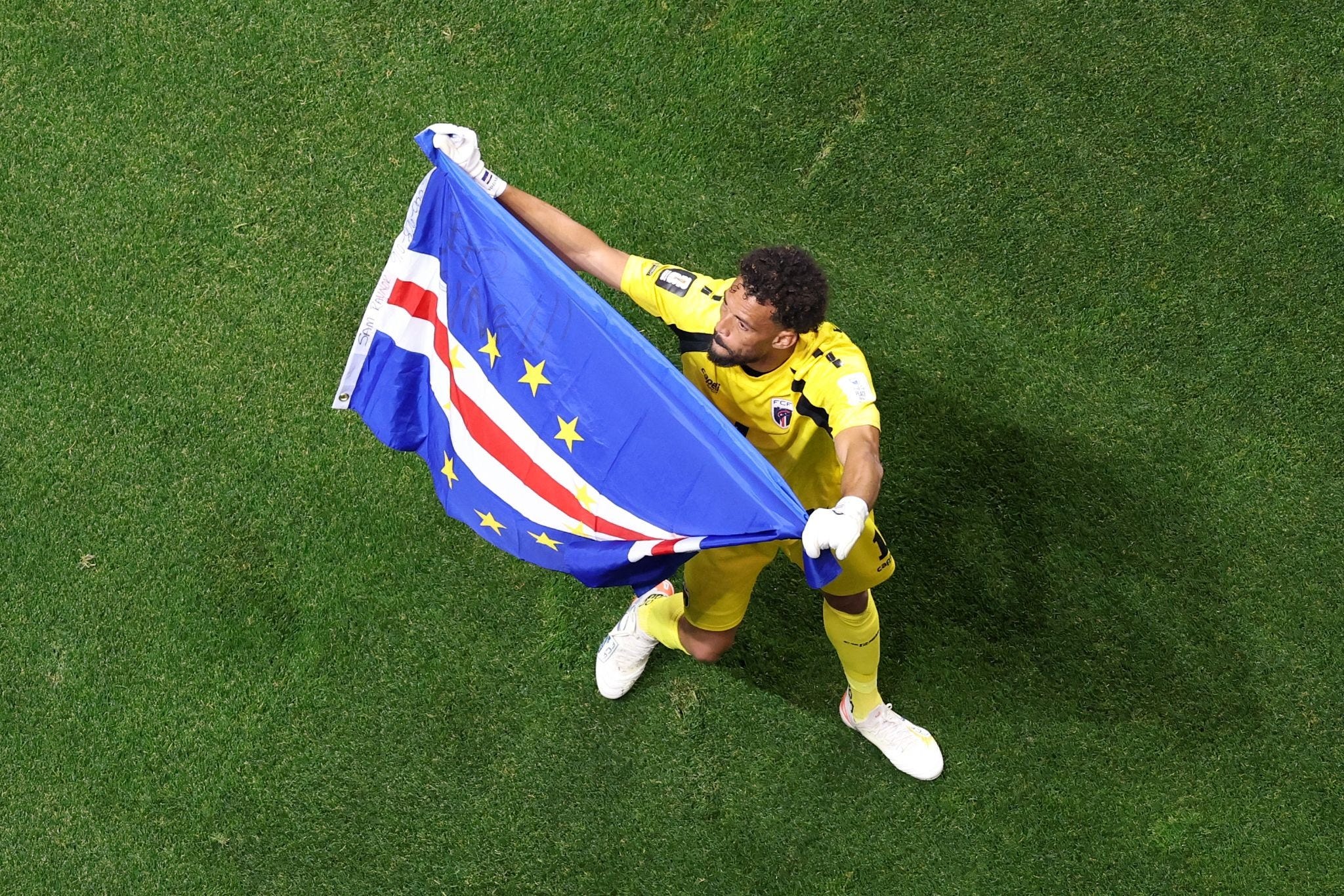
But do you not think it’s thrilling to Cape Verdeans or Haitians or Iraqis to be there to compete? Cape Verde actually drew with Spain on Monday. Iraq and Curacao lost, badly in the end, but at least their teams briefly leveled the score and gave their fans a moment of hope.
Does this come at a cost of competitive integrity? I’ve watched perhaps 75 percent of the World Cup so far, and I wouldn’t say so. Minnows are fun, and the matches have been feisty. The first weekend of the NCAA tournament is exciting precisely because of the possibility of seeing a 1-in-50 upset, even if UMBC or whomever was inevitably going to bow out in the next round.
Switching modes from fan to analyst, does the competitive state of international soccer warrant the expansion? In other words, is the talent gap narrowing between the Spains and the Cape Verdes of the world?
(I wouldn’t say the worst teams; there are 211 FIFA members, some of whom occasionally lose games by scores like 31-0.)
Not exactly. Our PELE ratings are (retrospectively) calculated all the way to the dawn of competitive international soccer in 1872, so we can look at the state of the sport as far back as the first World Cup in Uruguay in 1930. If you lined up the teams from #1 to #211 based on their PELE ratings at the start of each tournament, here’s what you’d get:
In 1930, there would hardly even have been enough FIFA members to fill out a 48-team tournament, and many of the prospective invitees declined to make the trip — by ocean liner. Since World War II, the gap has narrowed a bit but not that much. Some of the African teams are very good, as are Japan and South Korea in recent years. But the rest of the world (including the U.S.) hasn’t made consistent progress. Outside of Europe and South America, only the United States (in 1930), Korea (at home in 2002) and Morocco (in 2022) have ever reached the World Cup semifinals.
Still, though, why do you think college football teams frequently pay far-inferior rivals to travel to play them? It’s a feature, not a bug, for commercial sports that some teams have almost no chance. It can still be a win-win — the favorite usually gets a W, but the underdog pulls off an upset just often enough to keep things interesting. Meanwhile, FIFA and its broadcast partners have more advertising impressions to sell.
32 teams out of 48 advancing is too high a ratio
Few, if any, matches so far in the 2026 World Cup have failed to provide at least some entertaining moments.
The real problem, from a “game design” standpoint, is that FIFA’s new format has rendered the group stage more of an exhibition tournament. With two-thirds of the teams advancing, it almost takes more work not to advance than to do so. Spain, for instance, has more than a 95 percent chance of advancing in our model despite their unlikely draw against Cape Verde. There are really no more Groups of Death, since a majority of third-place finishers survive — the fourth-place team might be someone like Curacao, which lost 7-1 to Germany.
There are ways to keep the group-stage exciting with a 48-team format. FIFA could, in principle, have a 24-team knockout stage, with the 8 best finishers in the group stage getting byes. They aren’t going to do that, though, because England playing Uzbekistan in the Round of 32 rather than getting a free pass is still an opportunity to sell Coca-Cola products. (And England would probably lose on penalties anyway.)
A more underappreciated problem is that 12 groups flowing into 32 knockout-round slots creates both figurative and literal asymmetries. Two-thirds of the 12 first-place finishers are scheduled to face a grab bag of third-place teams based on what’s literally an indecipherable algorithm.6 The other four, though, are unlucky enough to play second-place teams in the R32, which means we could quite easily end up with Spain against Argentina (our two pre-tournament co-favorites) in the opening round should one team finish first in its group and the other in second. The old 16-team playoff format was much more elegant: every first-place team from the 8 groups faced a second-place one.
Go ahead and expand to 64
My preferred solution would probably be to see 8 groups of 5 or even 6 teams each (so, 40 or 48 teams total) with only the top two advancing. That would make the best group-stage matches extremely meaningful — advancing would be much harder — though it creates a risk of dead rubbers (i.e., games after both teams have been eliminated).
Probably the more natural solution, though, and the one that FIFA is more likely to adopt despite its occasional disavowal of the idea, is to simply double the previous 32–team format to 64. Instead of 4 teams x 8 groups (=32) you’d just have 4 x 16 (=64). The top two would advance from each group.7 You wouldn’t need any of these shenanigans involving the 3rd-place backdoor.
But wouldn’t this water down the group stage even further? I assumed so at first, but after running the numbers to calculate who else would have advanced this year under a 64-team format, I don’t actually think so.
Despite the 48-team format, a number of prominent teams are still missing from the World Cup, including countries like Nigeria, Italy, and Greece, which have large diaspora populations in the U.S., as well as sympathetic overachievers like Costa Rica and Cameroon.
Some of that is because FIFA has contradictory objectives. It undoubtedly isn’t happy that Italy missed the tournament (for the third time in a row!), but it also wants to grow the sport. If you went strictly by PELE ratings, then 26 of the 48 qualifiers would have been from UEFA (Europe) and 9 others from CONMEBOL (South America, excluding Suriname and Guyana). That doesn’t leave many positions for the rest of the globe, and many of the exceptions are either from North America or the oil-rich states of the Middle East, not really the developing world.
So what would a 64-team tournament look like? The conventional wisdom is that FIFA would punch up Europe and South America8, perhaps compensating for having gone in the other direction when going from 32 teams to 48.9 Still, you could keep things relatively proportional with an allocation like this:
I interrogated which teams would have been most likely to qualify this year if the tournament went from 48 teams to 64 using these allocations. It’s not an entirely straightforward counterfactual question because the whole qualifying format would have been different with more slots available. But I basically looked10 at which teams in each confederation came closest to qualifying this year but barely missed out. I even accounted for an expanded inter-confederation playoffs and randomized the results based on PELE odds. (Three of the four favorites advanced, but Ireland got unlucky and lost out to Honduras.11) No, I don’t care to debate the specifics of this, especially since this is meant as a hypothetical for demonstration purposes — though most of the choices are fairly straightforward, with some ambiguities arising from Europe, which had a weird qualifying structure this year.
The additional qualifiers were, in alphabetical order: Bolivia, Cameroon, Denmark, Honduras, Italy, Jamaica, Kosovo, Nigeria, Peru, Poland, Slovakia, Suriname, Ukraine, the United Arab Emirates, Venezuela and Wales.
Actually not such a bad group! Many of these teams would have been big draws in a North American World Cup and/or fun watches. If you look at PELE, the biggest gap is between the top 6 to 10 teams and the rest of the field. Team #32 isn’t that much better than team #48, and likewise, #48 isn’t that much better than #64, especially given the luck of the qualifying draw.
Having chosen the 64 teams, I used FIFA’s methods to randomly assign them to groups, abiding by a few requirements: 1) “Pots” were selected based on FIFA rankings as of November 202512; 2) No more than two UEFA teams or one team from any other confederation could go into each group; 3) Hosts (so the U.S., Canada and Mexico) were automatically put into Pot 113; 4) Inter-confederation playoff winners were automatically put into Pot 414 and 5) Since the assignment of group letters (i.e. A through L, now expanded to A through P) is basically arbitrary, I kept these the same for squads that were one of the 12 Pot 1 teams in the actual tournament15 (e.g. Argentina remains the anchor of Group J). Here are your new groups16:
There are a few real stinkers here. The United States draws Wales, DR Congo and Jordan. We sure as hell ought to advance from that group. And France, instead of a relatively difficult Group I in the actual tournament, would face Panama, Egypt and Kosovo. But our new Group J is pretty good (despite containing three new qualifiers). Group H isn’t that easy either, with Spain, Turkey and Paraguay — and Spain would also get a rematch against Cape Verde.
But these groups aren’t obviously weaker than under the 48-team format this year. Moreover, with strictly two teams qualifying from each group instead of probably three, the consequences for missteps are much higher. If Spain had drawn with Cape Verde in our new Group H, for example, it would be in quite a bit of trouble with three decent teams in the group17 and only two passes to the knockout round.
You’re more than welcome not to like this expansion from 104 to 128 (!) matches, but the 2030 World Cup technically has six co-hosts18 and almost seems designed to facilitate it. So here's my bet: FIFA goes to 64, sells it as a one-off centennial gimmick (the first World Cup was in 1930), everyone complains, the complaints evaporate after another fun tournament — and then 64 is just how it's done.
My partner and I went to five fairly premium events for less than the price (combined) of a Knicks Game 3 ticket, and our Airbnb and flights were no more expensive than you’d usually expect for a trip to Milan in February
Finland’s “prevent defense” was probably a bad strategy against Canada.
I don’t want to encourage sportsbetting degeneracy, but the judges are much more sensitive to crowd reactions than you’d pick up on TV. There are probably some sharp bets to be made there.
Scores partly carry over from the short program, and some skaters may not have enough difficulty in their routines to compete for the podium.
There is, indeed, a stuffie U-curve. You’ll get a lot of stuffies thrown out if you’re terrific or if you obviously fucked up (as a gesture of sympathy), but not so many for an uninspired, middling performance.
We burned a lot of Claude tokens trying to crack FIFA’s algorithm for placing 3rd-place teams into the playoff bracket, and it concluded that it was literally a few guys messing around with an Excel spreadsheet. The placements are, however, deterministic via a complicated lookup table.
You could also seed the bracket from 1-32 based on group-stage performance instead of pre-ordaining which groups faced which, but that’s a secondary consideration.
South America’s CONMEBOL is awkward because it has just 10 members, all of whom are reasonably good at soccer. I guess the concern is that it would make the qualifying tournament meaningless if everyone or almost everyone made it.
You could argue this was for non-financial objectives as well, i.e. due to FIFA’s governing politics.
With help from Claude and ChatGPT, which agreed on all but one team.
The other simulated inter-confederation playoff results were Slovakia > New Caledonia, Peru > Gabon and Venezuela > Oman.
These were the most recent as of when FIFA conducted the draw in December.
In other words, treated as top teams even if their FIFA ranking doesn’t warrant it.
Even if they’d be good enough to qualify for a better slot, FIFA actually conducts the draw before the field is complete, so this better reflects the procedure they follow.
The new Pot 1 teams, based on FIFA rankings as of Nov. 2025, are Colombia, Croatia, Italy and Morocco.
We gave groups A-L animal mascots, so we’re expanding the zoo. A moose (Group M), octopus (Group O) and penguin (Group P) are naturals to meet our criteria for animals with a lot of personality. There are surprisingly few animals that begin with the letter “N” though. I guess we’ll call 🐦⬛ a “nightingale”, but nightingales aren’t actually black.
Granted, Turkey and Paraguay were among the most disappointing teams in their first matches.
Spain, Portugal, Morocco, Argentina, Paraguay and Uruguay.
I think the trickiest thing about a 64 team tournament is given the number of requirements that FIFA has of host countries, it very much limits the number of countries that could host it even in concert with others. Its the US, Europe, and Saudi mostly. China if they ever want to spend the money but pretty much anywhere else in the world would require significant spending on infrastructure even if you split it up amongst 3-4 countries.
Strong piece, and in the group stage jeopardy, I would go further. You call the group stage "more of an exhibition" with two-thirds advancing, and propose fixes. The problem isn't just the ratio; it's that you now grind through 104 matches to eliminate sixteen teams. In 1994 and at Italia 90, teams needed half as many group games to knock out eight teams. So this tournament is actually two USA '94 boltted together! The drama of two-through, two-out in a tight group, the thing that made the final round in 2022 so good, and convinced FIFA to move from 16 groups of 3 this time around, can't exist when the gap between seed and minnow is this wide and survival is this easy. It almost takes more work not to qualify than to do it.
The bigger thing missing here is the fan experience, both on TV and actually travelling. I went to South Africa in 2010. Flew from the UK to Johannesburg, booked before the draw, ended up with tickets at Ellis Park and Soccer City for the seeds, then chased England down to Cape Town, Port Elizabeth and Bloemfontein to watch them play badly several times. But the point is we went to the World Cup, followed England, and still saw Brazil, Spain, Netherlands, Argentina and Italy along the way, against the likes of Ivory Coast, Slovakia and Denmark. Decent secondary teams. You could base yourself somewhere and see real quality. Try doing that in North America now for the group stages? Base yourself in Boston and tell me how many high-quality games you get. I'd been thinking about going for years and didn't even consider it once the schedule and prices were finalised. Selling out Austria-Jordan or a $1,500 ticket to see DR Congo-Uzbekistan is great for FIFA. It's not great for anyone who actually wants to watch the football. It's also not sustainable in other countries; a 64-team tournament is likely to kill the single-host World Cup or reduce the pool of potential hosts unless countries are happy to be thrown a bone of half a dozen matches.
On the global TV audience, I average 40-plus live games a tournament, every tournament, and I'm finding this one a stretch. I stayed up for Ivory Coast-Japan at 2 am in 2014 quite happily, because there was a guaranteed floor of quality. Asking people across Europe to stay up past midnight on a weekday for the post-midnight North American kick-offs is a big ask at the best of times. Asking them to do it for the weaker end of a 48-team field is another thing entirely. If someone like me can measure out the course of my own life in these tournaments, is looking at a 64-team competition and thinking of checking out, the marginal viewer is already gone at 48 and will quite possibly not engage in the tournament until we get to the business end. On goals per game as a metric of quality, I don't think that captures any of that: 3.1 gpg flatters precisely the mismatches the format is hardest to defend. Germany 7-1 Curacao wasn't a better watch than 3-1 would have been, and audiences will be aware of that.
Qualifying drama should count as part of the story too, not something we bin to fit more teams in. 17th November 1993 produced one of the great days in international football, and it happened because slots for European teams were scarce and the jeopardy was real. England, France, Denmark, Poland, and the legacy Czechoslovakia RCS team all went out that night. England qualified this time without conceding a goal or dropping a point; there are no "Do I Not Like That" and "Hit Les" cultural touchstones from whipping Kosovo and Albania at Wembley. You don't put twenty runners in an Olympic 100m final; you run heats, and the heats matter precisely because not everyone gets through.
Sixty-four out of 211 at the finals doesn't work for me, as inclusion feels like scrapping the heats. I don't even think FIFA would go down the route of 16 groups of 4 (I'm wincing at the prospect of the last Panini sticker book having over 1,000 stickers!). I would guess they would more likely go for two UCL-style Swiss leagues and play 96 group games to achieve a clear 16 v 16 split between the two sides for the knock-outs. They could even consider cutting the last 32 and giving each team a guaranteed four games at a World Cup for the first time.
And let's be honest about why FIFA expanded. It wasn't for Cape Verde and Curacao. It was to get China, Indonesia, Nigeria and the big broadcast markets through the door. Italy's absence for a third straight time is proof: if FIFA actually wanted Europe's best, they'd have handed UEFA the slots. A story like Spain - Cape Verde is incredible and, fair enough, but they have built a real side since the mid-2010s and would eventually have reached a 32-team World Cup. I wouldn't say the same for Curacao, and the question is how many sides is it worth letting in to get a Cape Verde fairytale?