

How Trump conquered the Republican Party
My interview with Seth Masket on his new book about the GOP

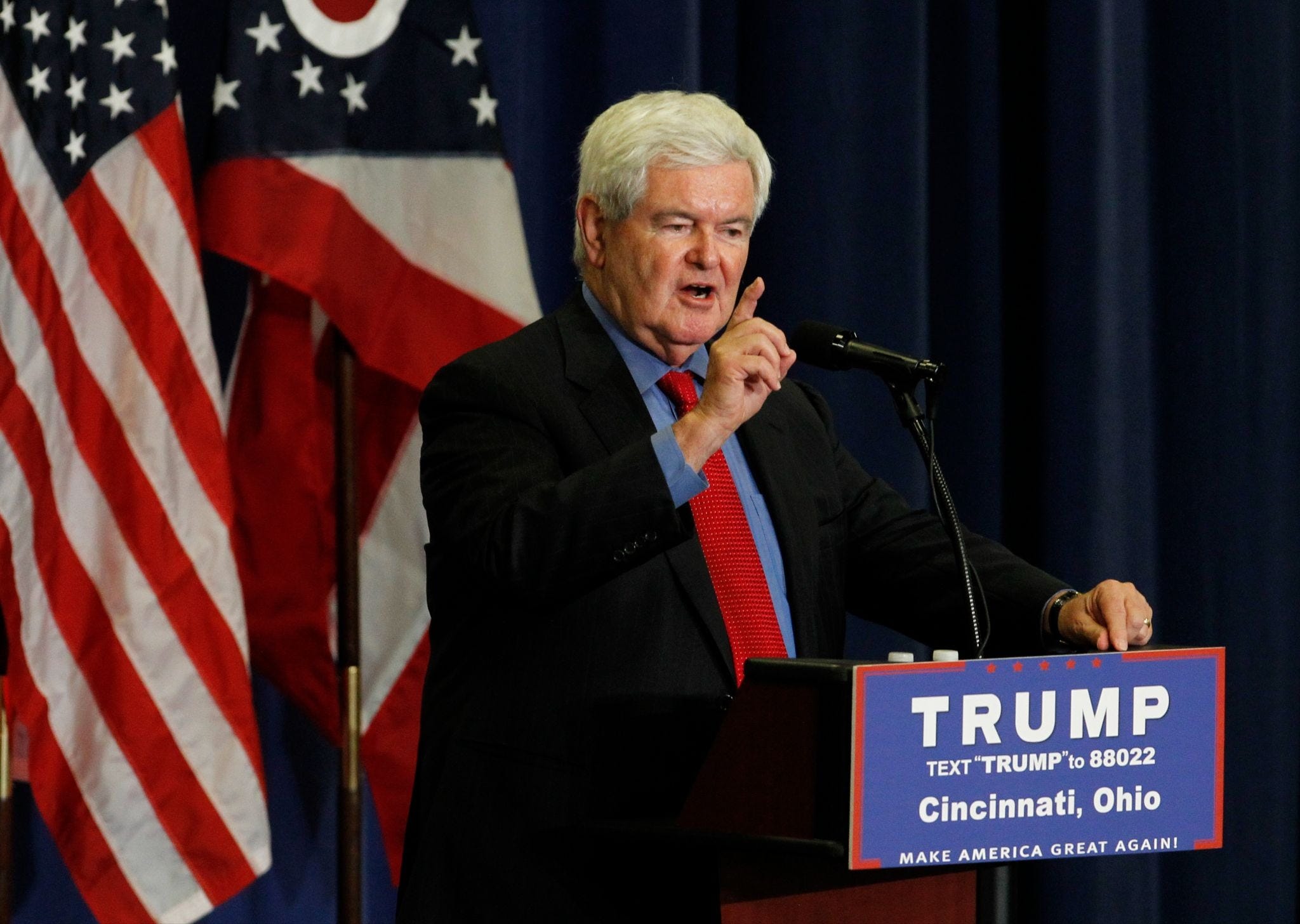
In 2015, I made the biggest mistake of my career by being too dismissive of Donald Trump’s chance of winning the Republican nomination. But I had my reasons, even if they weren’t great ones. The “lesson” of 2012 had been that populist or insurgent candidates — Herman Cain, Rick Santorum, Newt Gingrich, you name it — could surge for a time in the polls, but wouldn’t survive sustained scrutiny. The Republican establishment always got its way in the end in the form of candidates like Mitt Romney.
One forecasting lesson here, and something I’m usually better about, is to avoid becoming fixated on stylized narratives like these. In other words, be wary of declaring things to be iron laws of politics when you’re dealing with a small sample and the strategies are still evolving. The entire process we use for nominating presidents is relatively new, having basically begun in 1972 with the McGovern-Fraser reforms.
Another reason for my misplaced confidence in “not Trump” was academic research in the form of books like “The Party Decides,” which provided empirical support for the idea that “party elites” tend to get what they want. Furthermore, there was a quantifiable signal of this: endorsements.
But if you actually try to build a real statistical model of the presidential nomination process, as I did in 2020, you’ll find that while endorsements do provide some signal, the data is pretty ambiguous, and it’s best not to rely on any single indicator.1 Even Romney’s win in 2012 wasn’t all that decisive. Cain, Santorum and Gingrich were not exactly a murderers’ row of candidates. While they didn’t come super close, Santorum won 11 contests, and Gingrich won two.2 In real time, I don’t think I spent enough time thinking about questions like “what happens if a populist comes along who’s 10x more charismatic than Rick Santorum?” (not a high bar).
Donald Trump’s win in 2016 wasn’t all that decisive either — there was some resistance. He lost Iowa to Ted Cruz, and as late as April or May, a contested convention still seemed plausible. Cruz even refused to endorse Trump at the RNC, drawing boos. During the general election, many prominent Republicans denounced Trump in October following the “Access Hollywood” tape, perhaps figuring that the election was a lost cause. And Trump’s cabinet in 2016 (including Vice President Mike Pence) consisted of a fair number of “establishment types”.
But Trump has consolidated his power over the Republican Party over the past 10 years. In 2024, he won every Republican primary except for Vermont and Washington, D.C. That came despite a fairly star-studded list of names running against him, including Ron DeSantis, Nikki Haley and Pence.
My interview with Seth Masket
Trump’s election in 2016 and return to power in 2024 are one of the most important stories in American political history. Sometimes it’s worthwhile to think about it through a historical/political science lens instead of the latest breaking news chyron on CNN.
So I wanted to provide that context before introducing the video3 of my Substack Live on Thursday with Seth Masket, a political scientist at the University of Denver and the author of the excellent new book, “The Elephants in the Room: How Trump Voters Seized the Party from Republican Leaders.”
As Seth’s subtitle implies, Republican voters played a role in all of this. The establishment lost credibility after John McCain and Romney lost consecutive general elections. Trump zagged on immigration while the party establishment zigged toward the center. The choices it offered voters were growing stale. Even though George W. Bush had left office as one of the most unpopular presidents ever, it thought Americans might want a new Bush: Jeb!
However, Trump has also benefited from not exactly always playing within the rules. Seth’s previous book, “Learning from Loss”, covered how Democrats responded to the defeat of Hillary Clinton. Parties rarely want to renominate losing candidates, for one thing. But those learning mechanisms are fundamentally broken when you falsely claim that the election was stolen from you.
Trump has also frequently behaved like a “mob boss”, relying on threats and coercion, and Republicans sometimes even fearing for their physical safety by opposing Trump.
All of this makes Republicans a deeply unhealthy party. Still, there’s a lot to consider, including whether the GOP could have averted Trump’s nomination in 2016 by consolidating around a single alternative4 — and what’s next for the Democratic Party as its voters also become estranged from the party establishment. I hope you’ll enjoy the conversation as a little break from the news cycle (and the World Cup).
Ironically enough, though, 2020 was a very good year for the “Party Decides” paradigm, with the Democratic establishment rallying behind Joe Biden before and after the South Carolina primary after Bernie Sanders had won 2½ of the first 3 races — and their voters going along with this.
And Ron Paul technically won four, though through delegate machinations as state conventions.
The video has been lightly edited to remove a technical glitch midway through.
It probably helped Trump that Cruz, probably the closest thing to a compromise between the MAGA and establishment factions, was an unappealing candidate in many respects.
Somebody please honestly try to articulate for me why a bluesky-only academic is remotely qualified to tell me literally anything about the GOP base.
Newt Gingrich is a piece of shit. His Wife was dying in a hospital from Cancer when Newt went to ask her for a divorce, and made his wife sign the papers.
I don't know why any Black person could ever vote or support Donald Trump. Trump would get rid of all Black people if He could,