

How much can Trump screw with the midterms?
Doomsday scenarios are unlikely, but the realistic ones deserve more attention. A Q&A with Votebeat's Nathaniel Rakich.

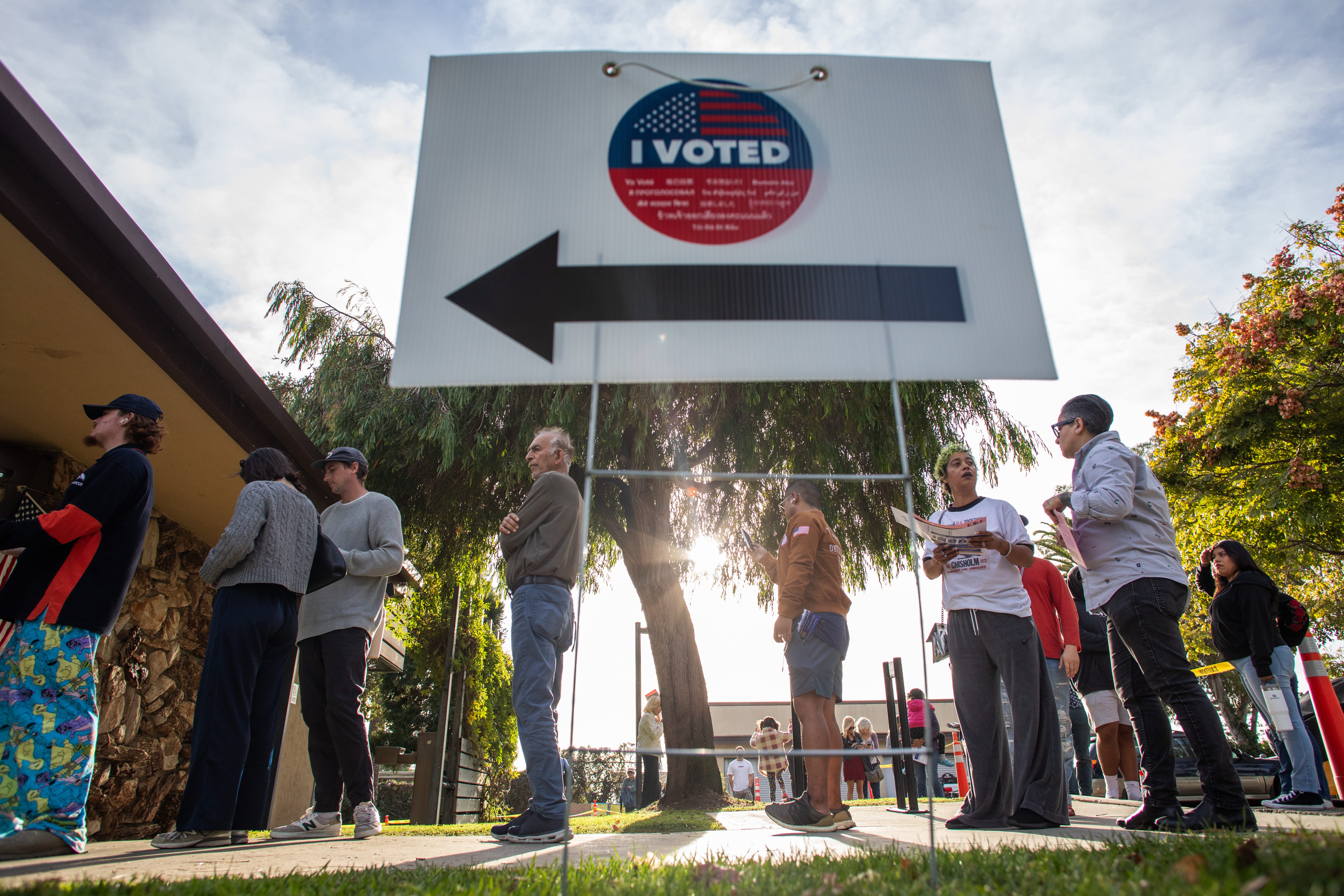
Compared to some recent hot topics — like the Iran War and the attempted shooting at the White House Correspondents’ Association Dinner — election administration looks fairly mundane. Some might even call it dull. That’s generally a good thing, because vote counting only becomes the headline after something goes wrong. But one man who does care about election administration is Donald J. Trump. Aside from his longstanding insistence that the 2020 election was “stolen” — which, of course, it wasn’t — the president has put out a steady stream of executive orders and Truths about how Americans vote and how those votes are counted.
Many of the Trump administration’s election-related actions get held up at some point in the legal or legislative process. Still, it can be hard to know what to make of the competing executive orders and bills. Will they all get struck down in court and not change anything? Or will Trump be able to use the presidency to affect — or even steal1 — the midterms? To answer those questions, I thought it would be best to talk to someone who covers election administration for a living: Nathaniel Rakich, the Managing Editor at Votebeat (and Nate’s former colleague at FiveThirtyEight). Here’s the lightly edited transcript from our conversation.
Eli McKown-Dawson: So before we get started — how have things been at Votebeat?
Nathaniel Rakich: They’ve been great. Elections are such a hot topic, and the administration of elections has been under the microscope to a degree that it really hasn’t been, at least during my political consciousness. These are really momentous things, and certainly, if the worst fears of people on the left come true about ICE at polling places, that’s going to be a tremendously important story. Obviously, who wins the election is the ultimate issue. But the really important thing is just making sure that everyone can vote and that all the votes are counted faithfully.
Trump’s executive orders have mostly been limited by courts
Eli: We’ll get to ICE at polling places eventually, but I’ll start a little simpler. There have been two big executive orders from the Trump administration on elections. The first one was issued about a year ago. Can you give me a brief walk-through of what was in that order and where it stands now?
Nathaniel: The first executive order was a real grab bag, and really was the first salvo in Trump trying to bring the federal government into election administration to an unprecedented degree. The main thrust of it was basically the SAVE Act and the SAVE America Act. It attempted to require people who register to vote to prove their citizenship with a document — like a passport, or a combination of documents, like a birth certificate plus a driver’s license. They tried to change voting machine certifications. Obviously, Trump pushed conspiracy theories about voting machines manipulating votes back in 2020. He’s been all about paper ballots.
The upshot is that the executive order was immediately challenged in court, mostly on the grounds that the Constitution pretty clearly delegates to the states and to Congress the power to run elections. The president does not have a role. So any executive order Trump issues is automatically going to be suspect, and that’s probably a kind word. Courts have consistently struck down, or I should say blocked, because the cases continue to proceed, and Trump could theoretically take it to the Supreme Court, the executive order. None of the major provisions from that order are operative right now, which is why the elections are proceeding normally.
Eli: A year later, we have a second elections-related executive order that was just issued. That one is more specifically about voting by mail, right?
Nathaniel: Yes. The key provision says that the Postal Service will maintain a list of people who are allowed to vote by mail, and it cannot deliver ballots from anybody who is not on this list. The confusing thing about the order is that it doesn’t specify how that list is generated. The order also contains provisions for a couple of other lists. It says that states, 60 days before the election, should send a list of people they expect to vote by mail to the US Postal Service. And then the very next provision in the executive order says the US Postal Service will send to the states a list of people who are allowed to vote by mail.
A lot of people assume that the second list is going to be based on the first list, but the order doesn’t actually say that. It doesn’t say how that second list is going to be generated. It doesn’t say anything about what the Postal Service should do with that first list from the states when they get it. And then there is a third list that appears to be completely separate from all of this. The order directs the Department of Homeland Security to create a list of US citizens above age 18 residing in every state, and to send that list to election officials in those states. Again, it does not require the state election officials to do anything with that list.
There’s been a lot of coverage that talks about this as creating a federal list of registered voters, which of course doesn’t currently exist — states and smaller municipalities like counties are responsible for maintaining their own voter rolls. But that’s not quite what this is, because it doesn’t have any legal teeth. And also, the list is not actually of voters, it is of adult citizens. That’s an important distinction, because the list doesn’t make any attempt to, for instance, weed out convicted felons who in most states can’t vote.
There have been some states, particularly Republican states, that have used federal databases to cross-compare against their voter rolls to check if they have non-citizens on the rolls, and it’s not difficult to imagine that they will use this list for a similar purpose. It’s also been speculated that the Postal Service will use the DHS list to be the intermediary between the two lists. The logic there would be: states send the Postal Service a list of voters that the states say are going to vote by mail; USPS goes through that list, strikes out the people who aren’t citizens according to the DHS list, and then sends the list back to the states, saying these are the people we think are allowed to vote by mail. But again, the order does not specify any of this. The order basically just puts these lists out into the ether.
This executive order is also being challenged in court on much the same grounds as the first one. There’s really no reason to think it’ll meet a different fate. The DHS provisions seem like they could hold up. DHS can make whatever lists it wants, especially since the list isn’t being used explicitly to remove people from voter rolls. But the parts about involving the USPS in mail voting, which is supposed to be the purview of the states, are likely to get struck down, or at least put on hold temporarily. I would be surprised if this order changes anything about the way that the midterms are run.
We are about seven months before the election, and it’s starting to get to that point where people are getting nervous about Trump trying to change rules at the last minute in ways that are perceived to benefit him.
Eli: And how involved is the Postal Service currently in administering elections?
Nathaniel: This is unprecedented. The US Postal Service has never had any other role in determining who will vote by mail. It just does the mailing.
Eli: One thing I was curious about with these lawsuits: is it all Democratic states or have there been Republicans signing on as well?
Nathaniel: It’s been partisan. There are currently four lawsuits. One is by the Democratic Party. Two were by voting rights groups. And then the last one, the most important one, is from the states. The states are obviously the ones who are the aggrieved party in this case, because it’s their powers that are being allegedly usurped by this executive order. That lawsuit was joined by Democratic officials from 23 states plus DC. That said, a couple of Republican secretaries of state have weighed in, neutrally to negatively. They’ve reacted coolly to the order, but none of them have sued over it.
Will Congress help Trump change how elections are administered? Probably not.
Eli: With both of these executive orders, what do you think the purpose was? Trump has for a long time talked about voter fraud in 2020, and non-citizens voting. But you have to assume that the expectation was that these orders would get held up in court. Did the administration expect these orders to do anything in the midterms? Or was it more of a messaging thing?
Nathaniel: That’s the million-dollar question. We don’t know what Trump’s motivation was. It’s hard to read his mind — famously, as the whole country of Iran is currently thinking about. On one hand, there’s a theory that he thought it would genuinely work. Maybe he thinks that he has these powers and thought that the courts would agree with him. Obviously, the federal court system as a whole is pretty conservative. He’s appointed a lot of them. Should it reach the Supreme Court, because of how clear the Constitution is on this issue, I still think they would rule against him, but it’s not a slam dunk. So Trump might have thought this was really going to work.
He could have thought this might not work, but it doesn’t hurt to issue the order and see what happens. And then the cynical interpretation is that he knew these weren’t going to pass court muster, but he’s just trying to stir up discontent around the election and create a premise for saying “Hey, I tried to require proof of citizenship, I tried to clean up mail voting, but the courts didn’t let me. And the election went forward and Democrats won, so it’s fraudulent.” And when the courts rule against any attempts to overturn the results, he can continue to say they stopped him, and delegitimize the election. The only thing I am comfortable saying for sure is that Trump clearly has strong feelings about elections and how they should be run, and feels that they are not run well and that it disadvantages Republicans.
And then it was, all right, Plan B — that was the SAVE Act and the SAVE America Act. If that were to pass Congress, the legal challenge would be a lot harder to make, because the Constitution explicitly says Congress can pass laws governing this process. But obviously the filibuster exists, and so that is unlikely to bear fruit as well. The timing of this executive order was probably not a coincidence, because it was after you had seen the SAVE America Act stall. Trump said you have to pass the SAVE America Act before you put any other bills on my desk. You should blow up the filibuster to do it. He put a lot of pressure on John Thune, and the votes just weren’t there to change the rules. At that point, that effort is dead. And so then Trump is like, all right, well, the ball is back in my court.
Eli: It doesn’t look like that’s going to pass at this point, right?
Nathaniel: Yes. In order for things to get through the Senate, they need to get past the filibuster, and that requires 60 votes. Republicans only have 53 votes. Democrats are never going to allow the bill to get past that threshold. A lot of Republicans were advocating using the talking filibuster.
The issue with that is that it burns potentially weeks of legislative time, and the Senate has other stuff it wants to do. A lot of Republicans didn’t even want to change the rules to do that, much less abolish the filibuster as a whole. Republicans are looking ahead to a potential future in which Democrats control the Senate again, and they would like the filibuster to still be in place at that time. So as long as the filibuster is still in place, there’s just no way for that bill to pass.
There have been talks about squeezing the SAVE America Act into the reconciliation bill somehow, which doesn’t require the 60-vote threshold. But it’s hard to make an argument for why a voting bill would be related to the budget, which is a requirement for reconciliation. So I would say that the odds that the SAVE America Act passes through the Senate are very small.
Eli: Just for the record, the SAVE America Act contains a lot of the same content as that first executive order, yes?
Nathaniel: It is the requirement for proof of citizenship. If you could ask Trump, “If you could change one thing about elections, what would it be?” — I think he would say we need voters, when they register to vote, to provide physical documentary proof of their citizenship. That is the main thrust of SAVE America. It also has a provision to require a photo ID to vote. Even for states that already have photo ID requirements — some accept certain types of IDs, and other states require other types — this would be a uniform requirement and override those. Also, a lot of Democratic-led states do not currently have voter ID laws, and this would implement them.
Eli: How is this looking at the state level? Because certain states, Florida for example, have tried to pass, or have passed quite similar bills. How many states have done that or are going to try before the midterms?
Nathaniel: That’s certainly where the real action is. If a state passes a law requiring documentary proof of citizenship, that is totally kosher — at least, you’d have to come up with a different legal argument to block it. I’m sure somebody will still file a lawsuit. In fact, I think they did in Florida. But there has been more movement on the state level.
Obviously, the blue states aren’t going to do anything. I believe there are four states that have enacted proof of citizenship laws just since the beginning of the year: Florida, South Dakota, Utah, and Mississippi. Going into the year, only three states had this policy: Arizona, New Hampshire, and Wyoming. So that is obviously a big change due to a movement that Trump has started. I should also note that none of these laws take effect until 2027. [Editor’s note: Rakich later clarified that only Florida’s law is delayed until 2027; the others take effect this year. See correction below.2] So that’s an important difference. The SAVE America Act would be effective immediately, and that is a big concern for election administrators. If they somehow abolish the filibuster tomorrow and pass this bill, election administrators would immediately need to start checking citizenship for newly registered voters. They don’t have the funding to do that. They don’t have the time to do that in addition to their regular duties preparing for the election.
Another way in which states have moved in the direction Trump wants is by changing absentee ballot receipt date deadlines. As part of the first executive order in 2025, Trump attempted to require all ballots to be in by Election Day. A lot of states — I believe it’s 14 — allow ballots to count if they arrive after Election Day, as long as they are postmarked by Election Day. That’s why in states like California the count takes a long time, because ballots are still coming in. Trump, in his first executive order, attempted to say no, every ballot is due on Election Day. That part was blocked in court. But there have been [several] Republican-led states that have said we are going to change our law from a postmark deadline to a receipt deadline since Trump entered office.
The other interesting thing is that Trump has said on Truth Social several times that we should get rid of mail ballots entirely. He has also said we should go totally to paper ballots and not use voting machines. Those are two things that even red states are not moving on at all. Vote-by-mail in general — and by that I mean no-excuse absentee voting — is popular. Polls show that even among Republicans, a decent chunk think voting by mail is fine. It’s popular among Republican politicians too. Campaign operatives know that it’s really helpful to be able to get mail ballots to people and track who has voted that way. So there is just no interest among Republicans to get rid of that voting method. And then there is an understanding that getting rid of voting machines would be an extremely costly and logistically daunting, if not impossible, task. So Republican states have quietly ignored that part of Trump’s request.
Eli: It’s also a speed and accuracy thing with voting machines, right?
Nathaniel: Yes. The Trumpy, platonic ideal is that everybody votes on a paper ballot and then those ballots are counted by hand. But a couple of municipalities have decided, in the wake of all this, to hand-count their ballots. It’s just a mess. It takes forever. It takes significantly longer than by machine. It’s less accurate. There’s a reason that we use voting machines to tally ballots.
Can Trump actually rig the midterms?
Eli: Obviously, with these measures we’ve been talking about — citizenship laws, vote-by-mail, absentee ballot receipt dates — there tends to be a partisan split. On one hand, there’s the “you want everyone who is eligible to vote to be able to vote” angle. But people also often talk about the partisan political dimension: is making it harder to vote going to benefit one party? The common understanding used to be that these laws will make it harder for Democrats to vote and advantage Republicans. Now lots of people talk about how that’s flipped, and actually, if you only allow people with a passport to vote, it’s going to be good for Democrats. What do you think of all that?
Nathaniel: It is not clear to me at all that these laws would hurt Democrats. I do think that is Trump’s expectation. He’s basically all but said, if you get rid of mail ballots and have voter ID, then Republicans will never lose another election. But I just don’t think the evidence is there. It’s highly uncertain. I think it’s important to have wide error bars on this.
But there are ways in which it hurts the Democratic coalition — people of color are less likely to have these documents. But those voters, especially Latinos, have been getting more Republican. In addition, older and rural voters are two groups who would be uniquely hurt by proof of citizenship requirements specifically. And then for rural voters, one thing that is underdiscussed about proof of citizenship requirements is that they would functionally eliminate the ability to register to vote by any method other than in person.
In most states, you can register to vote by sending in a form via the mail or do it online. Now, you could send those forms in, but before your registration was finalized you would still have to go to an elections office physically and show them your documents. For people in rural areas who might live a two-hour drive away from their county seat, that would be a real hassle. So it is not at all clear to me that these laws would have the partisan impacts that Trump hopes.
Eli: Whenever one of these executive orders comes out, you get a lot of Democrats who have this very cynical view of what all of this means: that this is Trump trying to take control of elections, and that he’s going to keep pushing. It goes anywhere from having ICE at polling places to straight-up canceling the midterms. As an observer, I tend to discount a lot of the most out-there stuff. How concerned should people be, if at all? Is there anything there to be taken seriously?
Nathaniel: There’s no question that Trump wants to involve the federal government in elections to a higher degree. That’s what the executive orders do. He’s also had the Department of Justice request voter rolls from every state except North Dakota, which doesn’t have voter rolls. DHS has also created or augmented an existing database called SAVE, which is essentially a database of people and their citizenship status. The Trump administration upgraded that system last year to be able to upload voter rolls in bulk. So several Republican-run states have given their data over to DHS to basically spit out a list of people who aren’t citizens.
The issue with that is there are a lot of false positives in the data, because the data that SAVE’s database relies on is unreliable. A state like Texas, for instance, got this data back from the federal government that said “here are all the non-citizens on your rolls’” The Secretary of State’s office told county clerks to get these people off the rolls. But when they went to check, a lot of those people were citizens. It’s important to note that states aren’t allowed to kick people off their rolls without notifying them, or at least giving them a chance to prove their citizenship. So it’s not as bad as it could have been — not mass voter purges — but the federal government is being used to at least try to take people off the voter rolls.
The worst-case scenarios are definitely more outlandish. Trump cannot cancel the midterms, full stop. He could issue an executive order tomorrow that said the midterm elections are hereby canceled, and they would still happen — both because the Constitution does not give the president the right to set election laws, and because the president has no role in administering the election. That is run on the state and local level by people who are a mix of Democrats, Republicans, and nonpartisan election officials, and they are almost uniformly — from all my conversations with them and our reporting — committed to doing the election. They are also all legally obligated to do the election. States have their own laws that they have to follow. So there is no chance that the midterms will be canceled.
The question of federal troops at polling places is a thornier example. That’s where you get into some uncharted waters. It is clearly illegal under federal law and a lot of state laws for armed troops or agents to go to polling places. But we don’t really know what would happen if Trump tried to do something like that. There’s also a chance that, for instance, ICE agents could conduct a bunch of raids in the neighborhood on Election Day — that’s not at polling places, so it conveniently goes around the prohibition. But obviously that’s something that might depress turnout, and could be considered interfering with the election. That is a concern. But the administration has said repeatedly that they are not going to send troops or ICE to polling places.
There was a concern earlier last year about National Guard troops. It’s also obviously worth noting the National Guard is under the control of the governor, and the courts have so far found, when he was deploying them, that if the governor doesn’t accede, then Trump can’t override that. But there are states with Republican governors. Greg Abbott in Texas, if that Senate race is tight, could he allow Trump to use the National Guard? Potentially. But it couldn’t happen in a state like Pennsylvania, where there’s a Democratic governor.
So there are a lot of legal and practical barriers between us and a situation where there are federal troops at polling places. But it is one of the bigger question marks, because even if you think it is unlikely — and I think it is unlikely — it’s not impossible. Obviously, if you’re an election official, you should be preparing for this scenario, even if there’s a 10 percent chance, because it would be a pretty bad scenario. If, for instance, National Guard troops impounded voting machines or ballot boxes, that raises questions about whether those ballots will be counted because the chain of custody is broken, which means you can’t ensure that they haven’t been tampered with.
The other thing I would say is that you can’t have a mass operation to do this. They’re not going to send National Guard troops to every polling place in Texas, because there just aren’t the numbers to do that. But could you have one instance in which a National Guard unit or a group of ICE agents is sent to one specific polling place in a Hispanic-heavy neighborhood and impounds the ballots? That would be bad enough, because it would interfere with the clean administration of the election and potentially throw out ballots of several dozens or hundreds of eligible voters. So it’s something worth being mildly worried about.
Eli: When you say mildly worried, if I had to press you and give you a scale of, say, one — normal election — to ten — canceled elections — where are you on that scale today?
Nathaniel: It’s somewhere in between. I think you should be at a one. That should be the default. Anything above a one is not good. I don’t want to give you a specific number. What I’m trying to communicate to people is that there are unusual things happening in this election with regard to federal interference, and there are potentially things that could happen that would be quite disruptive. But at the same time, it is unlikely that there will be anything on any kind of wide enough scale to reverse an election result. And certainly, the Democrats’ doomsday scenarios of a canceled midterm, or outright invalidating the election, are so far-fetched as to be not worth worrying about. But that doesn’t mean that the specific scenario I described of maybe 200 ballots getting thrown out in Arizona in a key House race — that is worth being concerned about in and of itself, even if it doesn’t signal the death of American democracy.
Eli: You mentioned talking to election officials, and them being almost uniformly committed to running the election normally. What has your experience been talking to them? I’d be curious about Democrats, and especially Republicans.
Nathaniel: Virtually all election officials are really good public servants who’ve been doing this for a long time and really want things to go smoothly. They don’t want any problems at polling places. These are local people. In many cases, they know their voters; they have personal relationships with their communities. Nobody wants to disenfranchise their own voters. So they are preparing for the election the same way that they always do. A lot of them are nervous and are hoping that none of these nightmare scenarios come to pass, but they are preparing for them. For the most part, they’re unfazed. They’d rather not have the executive orders looming over their heads, but they are getting ready to administer the elections the same way they always have.
Eli: The two executive orders are probably going to be held up in court, the SAVE Act probably not going to pass. Is there any chatter about anything else coming down the pipeline between now and the midterms?
Nathaniel: At the signing ceremony of the executive order last week, Trump made a comment that was basically like, “We’re still working on the citizenship issue” — it’s not clear whether he was referring to the SAVE America Act or whether he was saying that they’re going to do another executive order. It is definitely up in the air that there could be another executive order. Executive orders are ultimately going to be a fruitless way to make any changes to the election. But the closer you do it to the election, the more nervous it makes people, and the more potential there is to at least confuse people about the rules.
Eli: What are you going to be paying attention to, election administration-wise, heading into the midterms?
Nathaniel: Certainly making sure we keep an eye on the executive orders and the SAVE America Act. I don’t expect anything to happen there, but you never know. There are two important voting cases in front of the Supreme Court right now. One is about whether ballots can arrive after Election Day. Basically the argument there is that Election Day is Election Day, and any ballots that come in after that have missed a deadline. If the Supreme Court agrees, then those 14 states that still have postmark deadlines would change. That would be a fairly significant change, especially for a state like California. The other case threatens to overturn the Voting Rights Act. At this point it is too late to materially affect the 2026 midterms. But if the Voting Rights Act is indeed overturned, that would lead to widespread, probably nationwide redistricting before 2028 that would eliminate a lot of majority-minority districts, especially in the South, which tend to benefit Democrats.
Otherwise, we’re going to have to see how aggressively Trump tries to interfere with the administration of the election in the fall. And then we’ll see to what extent the results are legally challenged. The 2020 election was challenged on extremely dubious grounds, and it was a concern for democracy, culminating in January 6. But at the same time, the system held. I would expect the same to be the case here. The only concerning scenario is if Democrats do a lot worse than they think they’re going to do, and the House comes down to one or two seats, and then those seats are really tight. Any close election is subject to litigation, and there could be recounts, and the validity of every ballot gets scrutinized. That’s always a concern if the election is super close, but that is such a specific scenario that I don’t think it’s worth worrying too much about. But it’s something I’ll be keeping an eye on.
Your editor (Nate) here. I wasn’t quite sure whether to put steal in scare quotes (“steal”). There are some bad scenarios to worry about. There are also scenarios that could be substantially less bad, tinkering around the edges with no clear implications for the midterm outcome, and where language like “steal” wouldn’t be accurate. I hope today’s newsletter will help you to distinguish between these. —NS
CORRECTION: In our interview, Rakich stated that “none of these laws take effect until 2027.” After this article’s publication, Rakich informed me that he misspoke, and that all of these proof of citizenship laws, aside from Florida’s, take effect this year. I have left the Q&A transcript unchanged but inserted a note explaining when these laws take effect.
Great conversation. Enlightening and informative. I'm less concerned about shenanigans *before* the election (still concerned, just... less) and more concerned about what happens after. Confiscating voting machines, 'finding' noncitizen voting, and inspiring another January 6th is entirely within the realm of possibility.
I'm in a uncontested district/state but plan to drive a state over on election day and help. Free and fair elections should not be a partisan issue.
This is a great discussion, and I don't disagree with anything that's touched on here. But I will say it didn't mention what I'd consider to be the most likely "major" election interference potential, which is the House and Senate refusing to swear in new members because Trump has speciously claimed election fraud and the GOP leadership says "well we have to get this sorted before we can seat the new Congress".
That's what we really avoided on January 6 because we had some people in the administration and GOP leadership who were unwilling to go down that road, but I'm not sure we do now. And while I have some faith that the American people would push back in this scenario, that doesn't mean it wouldn't truly fubar things in at least the medium term.